Last February, Pete Miller did something rather unthinkable to many of his running retail peers: He eliminated the shoe wall at The Lakes Running Co., his six-year-old retail store in Excelsior, MN.
Miller knew he was shunning convention and breaking the mold. He did it anyway.
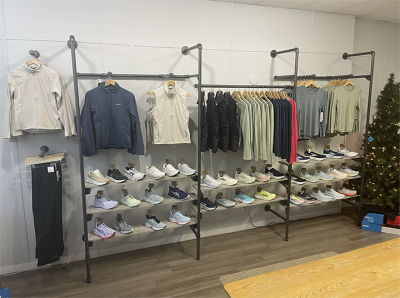
The shoe wall is the focal point of many run specialty shops, if not sacred ground, but Miller was convinced thoughtfully scattering footwear alongside apparel throughout his 1300-square-foot showroom – rather than centering all footwear in one defined location – would create a more lively shopping experience for his guests and better spotlight the store’s rich array of products. Last May, Running Insight detailed Miller’s thinking as well as his process, which included a four-day, $1500 investment featuring multiple Econoco Pipeline units, fresh paint and extensive elbow grease.
A year later, Miller smiles about the change and, even more, continues experimenting with different merchandising arrangements to stir traffic and sales at The Lakes. He recently connected with Running Insight senior writer Danny Smith to reflect on his daring move and its impact on his Main Street running store.
How's this revised merchandising arrangement worked for you?
We're really happy we made the change. The flexibility is the best part. For example, we initially had most shoes toward the back of the store in an attempt to pull people deeper into the space. In the spring, though, I noticed many window shoppers were poking their heads in, but not coming into the store. I felt like we needed to put some shoes directly in front of them to get those customers through the door. So, we put a selection of women's shoes up front – still intermingled with apparel – and it worked.
Have you added anything else over recent months to this merchandising setup?
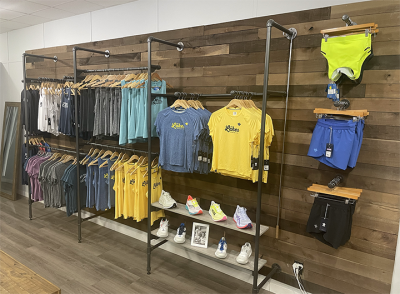
We used to struggle with apparel space in the fall as we added winter apparel like base layers, jackets, vests and pants while still needing to display the shorts, shirts and singlets we sell all year long. It just wasn't an issue this year as we were able to move things around and create apparel collections on the walls without packing the floor with racks.
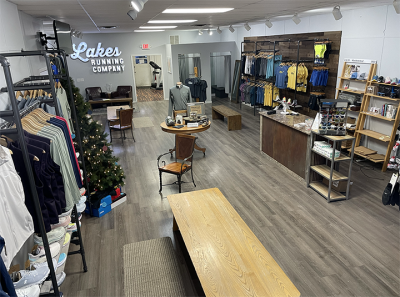
Due to the open layout, more customers came in and naturally walked through the whole space since there is nothing to impede their movement. They move around and look at each wall like it’s a gallery. We move apparel often and regular customers will discover apparel they haven't noticed before just because we put it in a different place.
You had hoped this new set up would spur greater apparel and bra sales. Has that worked?
I don't have hard numbers, but we feel like we did see an increase in branded apparel sales last summer and through the fall racing season.
In what ways has this new setup impacted the sit-and-fit experience or how customers interact with footwear?
I think customers are more engaged in browsing all models. All of the shoes are lower, so customers are more likely to touch and feel. It does encourage conversations about different brands or different models the customer had not considered until they came into the store.
How would you characterize customer response to this change?
People love it. When a customer hasn't been in the store for a while, they always comment about the new look. A lot of times, they struggle to figure out what’s different, as we didn't make a dramatic change to the space or the overall feel of the store, but they like that it's open and easy to see everything we sell. It has definitely encouraged more customers to walk around the entire store and browse the walls.
Back in the spring, one of the “areas” had court shoes and sandals and you described it as a flex space that could shift with the seasons. How have you leveraged that flexibility?
We always have one shelf that displays a specialty footwear category. Sometimes court shoes, Birkenstocks, enhanced trainers, trail shoes or spikes. Again, it's easy to change it up depending on the season and hope customers discover something they haven't noticed in the past.
.jpg.medium.800x800.jpg)