In a year marked by mounting threats to America’s public lands, Outdoor Alliance is making a clear case for what organized outdoor advocacy can achieve. Its 2025 Annual Report is both a recap of a high-stakes year and a roadmap for what comes next. Together with the group’s 2026–2028 strategic plan, the report shows an organization moving from reaction to long-term movement building.
Public lands policy can feel distant to the people who hike, climb, paddle, ski, bike and surf, yet in 2025 Outdoor Alliance helped turn that passion into action at scale by sending 1.3 million messages to lawmakers, holding 323 meetings with elected officials, and defending 3.3 million acres of public land from sell-off proposals.
“Over the last year, we saw growing bipartisan support for public lands and waters. At the same time, the outdoors is facing the greatest threats of a generation — unceasing efforts to eliminate regulations and protections, massive cuts to staff and resources for land management agencies and efforts to sell off millions of acres of public lands,” says Adam Cramer, CEO of Outdoor Alliance. “Our new strategic plan ensures the outdoor community continues to have a strong voice in the decisions shaping public lands. The path ahead may be challenging, but one thing is clear: when outdoor enthusiasts speak up, decision makers listen.”
A mission to unite
Outdoor Alliance’s mission is to unite the voices of outdoor enthusiasts to protect the human-powered outdoor recreation experience and conserve public lands. In 2025, that mission was tested.
The most urgent fight centered on efforts to sell public lands. According to the annual report, decision-makers floated multiple proposals that culminated in a plan to sell up to 3.3 million acres of public land. Outdoor Alliance responded by producing maps that made the issue tangible for people who use these places, helping the public see what was at stake in their own backyards and favorite recreation areas.
They also helped write letters focused solely on land-sale threats. Across all major campaigns in 2025, the outdoor community sent 1.3 million messages to lawmakers to keep public lands public, defend agency staffing and protect National Forests and Bureau of Land Management lands.
The annual report notes that lawmakers reversed course on land-sale proposals, citing constituent outreach and the outdoor community as a key turning point.
The 2025 story was about defense, implementation, coalition work and policy follow-through. One bright spot was the EXPLORE Act, which passed the House and Senate unanimously in 2024 and was signed into law early in 2025. The act marked a bipartisan achievement in outdoor recreation policy. In the months that followed, Outdoor Alliance and its coalition partners worked with federal agencies to help shape implementation.
That effort spread across the coalition. Access Fund pushed for the implementation of the Protecting America’s Rock Climbing Act. IMBA worked to implement the Biking on Long Distance Trails Act. Winter Wildlands Alliance defended the travel management rule. The Mountaineers advised the Forest Service on the Simplifying Outdoor Access to Recreation Act to help expand access to outdoor education opportunities.
At the same time, Outdoor Alliance fought to defend the Roadless Rule, which protects more than 58 million acres of National Forests. In 2025, the USDA proposed rescinding that rule, putting at risk backcountry areas that include more than 25,000 miles of trails, thousands of climbing routes, hundreds of miles of whitewater and more than 10,000 miles of mountain biking terrain. Outdoor Alliance generated more than 150,000 letters in response.
The group also rallied around staffing cuts at public land agencies. The report says the Forest Service, Park Service and Bureau of Land Management lost upwards of 25 percent of their staff over the course of the year. These were not abstract losses. They affected recreation management, permitting, wildfire prevention, and on-the-ground stewardship. Outdoor Alliance organized 120 groups to co-sign a letter to lawmakers and generated 144,000 letters calling for staffing support.
Meanwhile, a proposed rollback of the Public Lands Rule for BLM lands drew another 44,000 letters, as Outdoor Alliance worked to defend recreation and conservation values on those landscapes.
Focusing on the big picture
What makes the annual report stand out is its focus on infrastructure for advocacy, not just issue-by-issue fights.
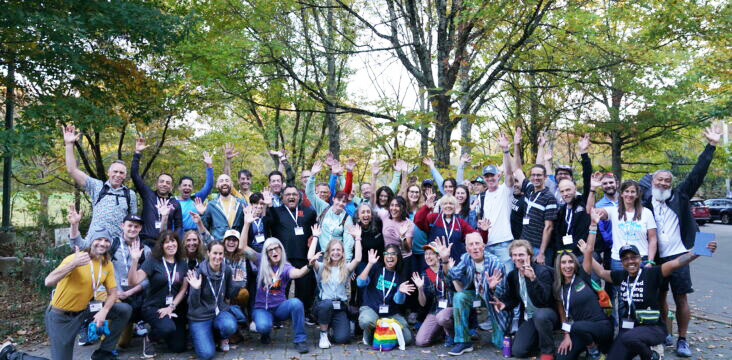
Outdoor Alliance trained 19 new leaders in 2025, bringing its fully trained advocate network to 39 people. These community leaders have strong constituent voices who can meet directly with lawmakers and move policy through trusted local relationships. The group also held a fly-in to Washington, D.C., resulting in 77 meetings with lawmakers, bringing its total to 323 meetings in 2025.
The goal is to make advocacy accessible, engaging and effective for a much bigger share of the outdoor public. Millions of Americans recreate outdoors every year, but only a small fraction engage in policy. Outdoor Alliance is trying to close that gap.
Outdoor Alliance says its next three years will focus on four priorities: building a durable, bipartisan movement for conservation and recreation, growing advocacy power within the outdoor recreation community, advancing policies that protect human-powered outdoor recreation experiences and strengthening Outdoor Alliance as a sustainable organization capable of meeting long-term challenges.
A bipartisan future
That framework reflects the current political reality. Public lands protections now face repeated pressure from deregulation, staffing cuts and development interests. The organization’s answer is not a single campaign. It is a stronger, broader advocacy movement that can respond across election cycles and policy swings.
The annual report also makes clear that sustaining that work requires support beyond activists and lawmakers. In one donor testimonial, Kaylyn Fern of the Whiteman Family Foundation said, “At the Whiteman Family Foundation, we prioritize organizations that lead with capacity-building. When Outdoor Alliance approached us about creating the Grasstops Collective, we were excited to support a national effort to protect public lands. We’ve had the privilege of watching the program evolve—and deliver real wins, including the passage of the EXPLORE Act.”
Kai Kinder, an Outdoor Alliance donor wrote: “I believe that if you truly love the outdoors, you have an obligation to support them. While that support can take many different forms, for me, being a contributing member of Outdoor Alliance is an especially impactful one. Knowing how passionate their team of experts is about the conservation of public lands and the protection of recreational opportunities as well as their ability to effectively advocate for those aims is a rare solace these days and one that I am more than happy to support.”
And finally, Annie Nyborg of Peak Design added: “Outdoor Alliance is a strategic partner of Peak Design — providing power in numbers in advocating for our public lands and the government affairs expertise to maximize our impact as a company. The protection of our public lands is of great recreational, economic, and environmental importance and Outdoor Alliance helps ensure that Peak Design’s voice is heard on the campaigns that matter.”
Outdoor Alliance’s 2025 Annual Report reflects a movement under pressure, choosing to grow stronger by converting a love of the outdoors into civic action, local voices into national influence, and short-term wins into a more durable public lands movement.