Trail running has grown in reach, visibility and cultural momentum. However, that growth has not changed who feels welcome on the trails. For many Black, Indigenous and People of Color (BIPOC) runners, there remains a deeper question of whether those spaces feel safe, familiar and built with them in mind.
That is why the Running Industry Diversity Coalition’s (RIDC) Freedom to Run: Back Outside initiative, an intro to trail running, was created after a 2023 examination of underrepresented experience in trail running in partnership with Bentley University and Blaze Partners. The findings indicated that a participation gap remains among BIPOC runners, shaping who shows up on the trails and who sees themselves reflected in the sport’s culture and future.
Freedom to Run: Back Outside was created to respond with action. With support from Superfeet and partners such as Altra, GU, Smartwool and Hydrapak, the program launched as a case study to test which kinds of support help new runners enter trail running and remain engaged.
The case study identified common obstacles for BIPOC individuals, such as gear, cost, safety concerns, lack of knowledge about trails, lack of a running community, intimidation and simply not seeing trail running as something meant for them.
The response to the study was immediate. Within 10 days of announcing the program on social media, nearly 275 people applied. Seventy-five percent of applicants were new to trail running. The cohort included runners of different ages, backgrounds, and life experiences.
Selecting the team
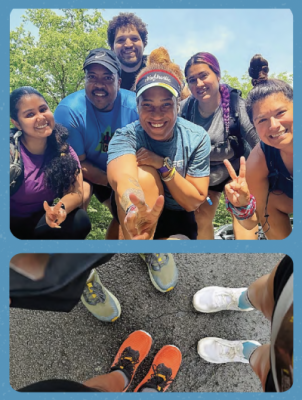
From that group, 14 runners across the U.S., all new to trail running, were selected for a six-month experience that included coaching, gear, community support, nutrition guidance and entry in their first trail race.
One participant, a plus-size runner, had completed 10 races, including three half marathons. Another, a mother and educator, turned to running as a way to heal after the loss of her daughter. A caregiver joined to learn about trail running and to connect with other BIPOC runners. Someone passionate about trails also organizes queer BIPOC hiking groups. Another participant is dedicated to reshaping the narrative around visibility in the sport.
One participant said, “I always thought of trail running as [a] form of movement only elite athletes engage in. I’ve only seen white people trail run and very visibly toned bodies on the trails leaping over obstacles.”
Another shared, “When I think of a trail runner, the first person I envision is not a Black woman. In my mind, I picture a young white woman like you see on team USA’s trail running team.”
Others pointed to fear and unfamiliarity. One participant said, “I think of running on uneven ground, which is intimidating considering how one wrong step can cause a lot of damage.” Another put it more simply, “I think of ultra running events, or falling.”
These perceptions shape whether someone signs up, asks questions, buys gear, joins a group or decides the sport is not for them before they even begin. Together, they made clear that there is no single “new trail runner” story, although there are common needs.
Wanted: A support system
The strongest finding from Freedom to Run: Back Outside is that beginner trail runners need support systems they can trust. That includes reliable gear, a sense of safety, authentic community and practical education to navigate outdoor spaces with confidence.
Without that support, trail running can feel exclusive. One participant captured the cultural weight of that exclusion by saying, “In a family with limited resources (and especially parents who escaped their country by navigating rocky terrain and had no wish to experience it again), it was simply noted: the mountains were not meant for people like us in America.”
Trail running can carry histories of class, race, migration, trauma and exclusion. It also shows why belonging cannot be treated as an afterthought.
The results went beyond finishing a first race. According to the case study, graduates continued trail running, launched trail groups, pursued careers in the running industry, rediscovered themselves through grief and achieved wellness goals that once felt out of reach.
Motivated by meaning
Participants were also motivated by the deeper meaning they attached to trail running. One shared, “When I reflect more on trail runners, I envision feelings of freedom and connection. The feeling of being able to connect with nature through running. This is something I believe everyone should be able to do regardless of how they identify.”
The goal was never only to add more names to a start list. It was to help more people experience the freedom, connection and joy that trails can offer when the right conditions exist.
What makes Freedom to Run: Back Outside especially significant is that it did not stop at observation. It turned insights into tools that others can use. Based on the program’s findings, the organization developed actionable steps for brands, retailers, race events and running clubs.
Many organizations now say they want to diversify trail running. Freedom to Run: Back Outside offers a clearer answer for brands that don’t know what to do next. Start with the barriers runners actually name, then build support around them in visible, measurable ways.
Action steps such as reviewing policies and programming to address hidden barriers, rethinking who appears in marketing and brand storytelling, making retail spaces more welcoming to first-time trail runners, offering education, mentorship and entry-level trail experiences and committing to at least one measurable change that expands access and belonging.
Freedom to Run: Back Outside shows that the participation gap in trail running stems from choices, habits, and systems that can be changed. When runners receive gear, guidance and genuine community, the sport becomes more possible and more personal.