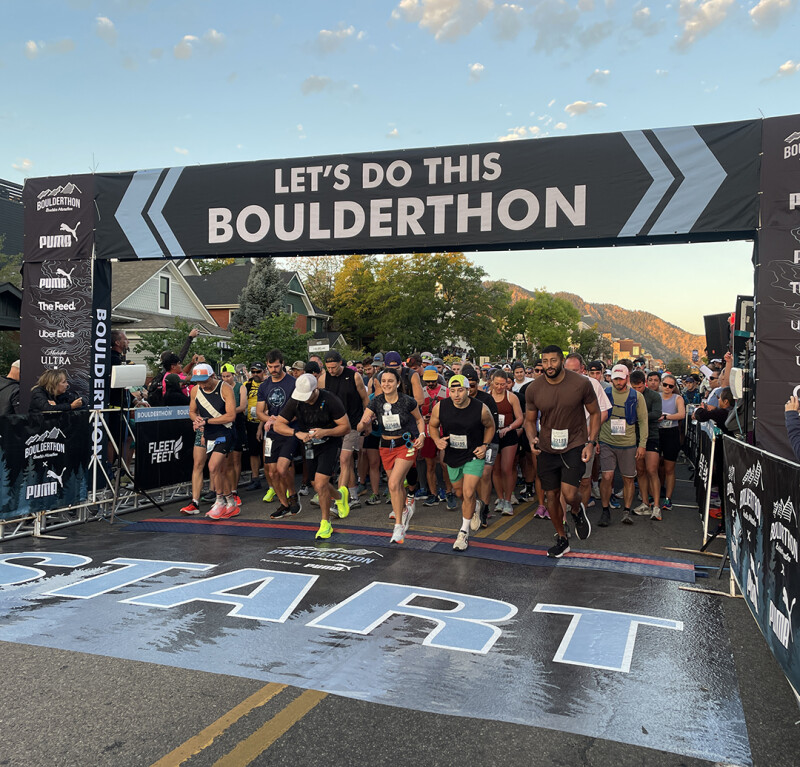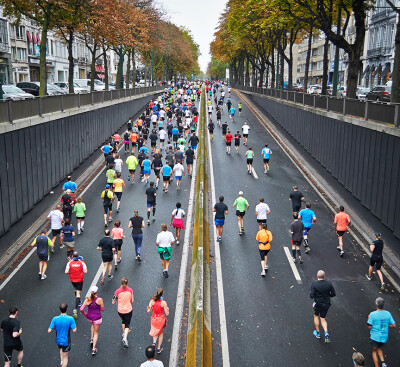
The numbers tell the story of the ongoing popularity of running, road racing and, in particular, the recent New York Marathon in early November. One number sticks out: 59,226. That’s the number of total finishers in what is now the world’s largest marathon.
In fact, the largest age bracket at the NYC Marathon was 25-29 year olds, with nearly 11,000 coming from that cohort alone — more than 1000 above any other five-year range. Akabas points out that the shift toward younger runners in recent years has been dramatic. In 2022, just 17 percent of all finishers at the NYC Marathon were under 30, but in 2025 that was up to 24 percent. The trend goes back further, too. In total, 86 percent more men and 91 percent more women aged 18-29 finished the 2025 race compared to a decade ago in 2015.
And Akabas reports that a similar jump has been seen at the Los Angeles Marathon, with the share of runners in their 20s rising from 21 percent to 28 percent during a four-year span. An analysis of all marathons in the United States confirmed that 25-29 had become the most common age range for runners in 2024 after that was far from the case as recently as 2019.
Just as interesting is that although the number of older runners is much smaller, the growth of that group has been equally great, with 88 percent more 60-plus runners completing the NYC Marathon in 2025 as did in 2015. Older women have been the fastest growing demographic on the course, with 159 percent more women in their 60s running than did 10 years ago, and 250 percent more women in their 70s.
The Chicago and Boston marathons have also seen more than 50 percent jumps in participation from runners over 60 in the past decade, according to Sportico. People in that age group made up just 3.6 percent of all New York Road Runners (NYRR) events in 2015, but 6.1 percent in 2025.
In the Sportico article Akabas surmises that the increase in younger runners can be attributed to the fact that running took off during the pandemic, when lockdowns made team sports and indoor physical activities such as group fitness classes less inaccessible. The boom in run club popularity post-COVID as a way to form community and meet both friends and romantic partners.
“Older people are less likely to be swayed to run 26.2 miles by a social media influencer, but they are coming out in droves nonetheless,” Akabas continues. “The first running boom in the U.S. occurred during the 1970s and early 1980s, meaning that today’s 60-plus population is the first group to enter that age bracket who lived their whole adult lives after running emerged as a popular recreational activity.”
Rather than a single spike, though, the increase in older runners has happened steadily over the history of the NYC Marathon. Factors that assist aging runners, such as medical treatment, recovery techniques and shoe technology, have gradually improved over time.
One final though from the Sportico article: “Older people like to criticize Gen Z for being lazy and not working hard anymore. Perhaps Americans currently in their 20s are not as keen on working 9-to-5 at their jobs, but with that extra time outside the office, many are dedicating themselves to running marathons. Ironically, that’s just what the Boomers are doing too.”
To read the entire article: