Running shoes may drive traffic, but apparel can drive margin, loyalty and possibly most importantly, an emotional connection to your store. Yet in many run specialty stores, apparel remains the most underperforming category, not because the product isn’t strong, but because the merchandising and selling strategies aren’t intentional.
Selling running apparel is both an art and a science. The science lies in placement, visual strategy and staff training. The art lies in storytelling, inspiration and emotion. When you blend the two, apparel can become a really powerful category that brings people in to see what’s new.
Why Apparel Requires a Different Approach
Here’s the reality: Very few customers walk into a run specialty store planning to buy apparel. They’re coming in for shoes, socks, nutrition or a specific need. Apparel is almost always an emotional add-on purchase.
Grasping this point changes everything. Success in this category doesn’t come from simply filling a wall. It comes from intentionally creating excitement before the customer even realizes they want it.
Here are five solid pieces of merchandising advice that can help make apparel a more improtant part of your run specialty product mix.
1. Win the First Five Seconds
If customers don’t walk in thinking about apparel, you have about five seconds to change that. First impressions matter…and in retail, the front entry sets the tone for what happens with shoppers inside the store. If customers are immediately greeted by a styled, energetic apparel presentation, you expand their mindset before they ever reach the shoe wall.
A strong front entry apparel moment might include:
• One two three full-body mannequins in complete outfits; top, bottom, socks, shoes, hydration and maybe even a hat.
• A bold seasonal color story.
• A curated table nearby with the actual product folded or stacked so customers can touch and feel the fabrics,
• Clear visual connection from that entry display to the apparel section with a clean line of sight and eye-catching signage.
This does two powerful things.
First, it plants the seed. Even if the customer walks straight to footwear, apparel is now on their radar — they’ve started thinking about that great looking outfit that greeted them at the door.
Second, it creates anticipation. When there is a clear line of sight from the entry display to the apparel section, customers begin to explore naturally. The store feels intentional and the journey feels exciting and inviting.
Apparel should not feel like a side department tucked away after the “important” categories. It should feel integrated into the very first impression of the store.
Excitement drives exploration, and this exploration is what drives apparel sales.
2. Use Mannequins. Good Ones.
There is no more effective tool for selling apparel than well-styled, modern mannequins. There’s a reason brands like Lululemon, Athleta and Anthropologie fill their stores with them. It’s because they work. A beautifully styled outfit on an athletic, contemporary mannequin allows customers to instantly visualize themselves in the product. It answers questions before they’re asked:
• How does this fit?
• What does this look like as a full outfit?
• How do I style it?
Don’t be afraid to integrate some strategic pops of color on these front-entry mannequins, as this can really create buzz and send a signal of “newness” to your shopper.
Once you get your customers thinking about apparel with that first impression, keep the momentum going as they move through the store. Stay consistent with mannequin presentations by placing them throughout the entire space, rather than limiting them to the front entry or the apparel section.
Some of the strongest apparel sales we see among our running store clients come from retailers who consistently integrate outfitted mannequins and torso forms throughout the store — near seating areas, in the footwear area, by dressing rooms and even close to the cash wrap when space allows.
The goal is repetition without redundancy. Each moment reinforces the idea that apparel isn’t a side category, but an essential part of the running experience. Every time you don’t include a styled outfit on a mannequin, it’s a missed opportunity to remind shoppers of the exciting new gear they could be running in tomorrow.
Don’t forget about the wide variety of mannequins and forms that you can incorporate into your displays to add interest. Leg forms, hand and arm forms for gloves, head forms for hats can all help highlight accessories and a growing selection of athletic cut plus size mannequins is now readily available. Torso and bust forms are critical for displaying sports bras. We consistently find high-quality athletic cut forms in a range of dynamic poses (including sitting, running, and stretching) from www.greneker.com
Remember, when apparel is consistently visible throughout the store, it naturally shifts in the customer’s mind from an optional add-on to an integrated part of their run journey, rather than something isolated on a back wall.
3. Consider Some Simple Techniques When Displaying Apparel
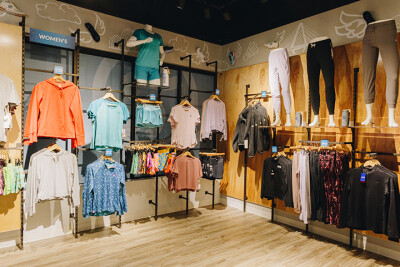
An effective apparel section should include a visible wall to display color stories and curated collections, as well as floor fixtures in front of the wall, that lead customers over and entice them to explore the many color and style options. Having all apparel on a wall or floor fixture only, instead of the combination, loses impact and makes it challenging to merchandising the whole category story.
Although every wall presentation you create comes with its own unique challenges, some simple rules of thumb apply across almost all apparel merchandising. When building your display strategy, remember that prints and statement pieces tend to get lost when hung sideways on a crossbar. Placing these items face-forward on a faceout is far more effective for catching a shopper’s eye.
• Reserve horizontal crossbars for your bulk inventory, such as high-volume items like solid colored shorts or core tights.
Crossbars are also ideal for showcasing solid tops or jackets in multiple colors. Displaying them side by side allows customers to quickly see the full color range you offer, while ensuring no important design details on the front of the garments are hidden.
When building your wall display strategy, remember to break up the large wall of apparel with shelves, mannequin forms, plants, props, graphics or anything else that can act as a focal point that creates interest for the shopper.
• When placing an outfit on a torso form on a shelf, be sure to place it right next to the inventory of that product on the wall, so the customer can easily locate the piece they love and not get frustrated digging through the racks to find it.
4. The Sales Perspective: Don’t Pre-Decide for the Customer
One of the biggest missed apparel opportunities in run specialty is simply not talking about it.
Staff members have no hesitation asking about footwear or socks. But when it comes to technical apparel, many hold back, often because of price assumptions and the feeling that they may be too “pushy.”
Actually, this is quite the opposite, as customers truly appreciate the insight of trusted running store associates. Employees who are used to pro deals may assume customers won’t pay full price and that is a costly assumption.
In reality, many specialty run customers appreciate performance fabrics, value comfort and innovation and often don’t even know certain products existed. Over the years, I have found that shoppers are actually excited about upgrading their wardrobe and have no problem shelling out additional funds at the register for a fun, new running outfit.
Its important to teach your staff that there is zero risk in asking the simple question during a shoe fitting, “Do you have a favorite short or tight right now?” Or, “Have you updated your cold-weather gear recently?”
Often, the customer just hasn’t wandered over to apparel and this simple conversation is the bridge they needed. Once your staff believes that they should never decide for the customer what they will or won’t pay, they’ll be pleasantly surprised by the increase they’ll start seeing in apparel add-on sales.
5. The Bigger Picture: Experience Over Transaction
Customers don’t drive to your store for the same experience they can get online. They come for expertise, community and inspiration. Apparel is one of your most powerful tools to elevate that experience. A beautifully styled mannequin tells a story and creates excitement about the product in a way that can’t happen when scrolling the web. The right first impression plants the seed with shoppers, and then a thoughtful staff question opens the door to discovery.
When you treat apparel as an emotional category, not just an inventory category, it begins to perform differently. The key thing to remember is that selling running apparel isn’t about pushing product. It’s about creating desire and excitement, telling a story and confidently inviting the customer into something new.
When you and your staff approach how you display and talk about apparel from this perspective, you may be surprised at how naturally it starts selling right along with those shoes.

.jpg.medium.800x800.jpg)