Happy Anniversary!
Compiled by Danny Smith
From run specialty shops hitting big-time birthdays to top brands celebrating landmark anniversaries, every year brings notable milestones in the running industry. These achievements deserve some shine and Running Insight is happy to point the spotlight in the appropriate direction.
Running Insight’s now-annual anniversary issue recognizes special occasions across the run specialty. Honoring perseverance, praising entrepreneurial grit and commemorating commercial endurance, these pages showcase the running industry’s earnest push to innovate, improve and excel.
Undoubtedly, there are other anniversaries being celebrated in 2026 and we sincerely apologize if we overlooked any. Feel free to contact Danny Smith at [email protected] and we will include you in an upcoming issue of Running Insight+.
And, of course, we have another anniversary issue planned for 2027. If you have a milestone anniversary coming next year, drop us a line.
Mizuno #120
Founded in 1906 by Rihachi Mizuno and his younger brother, Rizo, Mizuno initially made its mark selling and manufacturing athletic gear in and around its birthplace in Osaka, Japan. Initially focused on baseball, Mizuno moved into other activities, namely golf and skiing, over its first two decades before building its first track and field cleats in 1928.
Running has played a pivotal role in Mizuno’s ascent as an international athletic brand. As running boomed in the 1970s, in particular, Mizuno invested heavily in research and development and established itself as an industry leader with early hits like the M-Line, RunBird and Cat Plus. In the 1980s, sprint superstar and fashion icon Florence Griffith Joyner toed starting lines wearing Mizuno track spikes, which brought added global attention to the brand. The groundbreaking release of the Wave Rider 1 in December 1997, however, supercharged Mizuno’s standing as one of the top brands in modern running culture.
Today, performance running footwear featuring Mizuno’s now-iconic RunBird logo – legacy models like the Rider and Inspire as well as innovative new offerings like the Neo Vista, Neo Zen and Hyperwarp series – is worn by Olympians as well as everyday Joes and Janes training for their first community 5K.
Hitting its 120th birthday in 2026, Mizuno stands as one of the globe’s largest specialty sporting goods companies. Beyond its prevalence in the running world, Mizuno is a top-performing player in other sports, including baseball, softball, golf, volleyball, soccer and racquet sports.
Suunto #90
Finnish inventor Tuomas Vohlonen founded Suunto in 1936 to create a more accurate and stable compass capable of enduring harsh Nordic conditions. Vohlonen’s invention of the liquid-filled compass became the foundation of the company and established Suunto’s commitment to innovation, durability and exploration. Over the last nine decades, Suunto has consistently pioneered new categories in outdoor, sports and dive technology, including the 1998 introduction of the world’s first wristwatch carrying an altimeter, barometer and compass (the Suunto Vector).
This century, Suunto has increasingly pushed into the running marketplace with its multisport watches and endurance training tools designed to help athletes better understand performance, training load and recovery. Trail running was Suunto’s natural entry point into the running marketplace given the brand’s expertise in exploration, endurance and navigation. More recently, however, the company has targeted road and track runners, highlighted by last year’s energized launch of the Suunto Run.
“While the wearable market has become increasingly crowded, Suunto has remained focused on what the company sees as its core identity: creating dependable tools for adventure and endurance,” Suunto vice president of global brand Jenni Riihijärvi says.
The North Face #60
Fun fact: The North Face began not as a product company but rather a retail shop.
In 1966, Doug Tompkins – a member of the “Fun Hogs,” a tight-knit crew of adventurers living in Yosemite Valley – opened a small retail shop in San Francisco's North Beach neighborhood dedicated to curating the finest outdoor gear available. Tompkins named his small outpost The North Face to honor the toughest, coldest and most unforgiving side of a mountain. At the retail shop’s opening, the Hells Angels handled door security while the Grateful Dead played live tunes.
Two years later, Stanford University alum Kenneth ‘Hap’ Klopp acquired the business with a particularly bold vision: to move beyond retail and build the world's best outdoor equipment. Klopp oversaw the introduction of the brand’s now-iconic Half Dome logo and innovative gear like the first internal-frame backpack. He also instituted a lifetime guarantee of products and supported climate research expeditions.
After multiple decades of building gear for outdoor adventures and finding an unexpected spot as a streetstyle staple, The North Face has earned increasing prominence in trail running with its lively and diverse footwear catalog. The 2021 debut of its Vectiv collection signaled the brand’s earnest commitment to providing advanced footwear technology while the Altamesa and Offroad lineups have enhanced The North Face’s trail footwear portfolio and elevated its trail running cred.
Nike Swoosh and Waffle Outsole #55
The year 1971 delivered two significant – and enduring – developments in Nike’s corporate history with the creation of the Nike waffle outsole and the iconic Swoosh logo.
University of Oregon track coach and mad scientist Bill Bowerman concocted the idea of the waffle outsole after peering at his wife’s waffle iron. Perpetually investigating ways to improve footwear performance for his athletes, Bowerman wondered if an outsole material with raised waffle-grid nubs would improve traction across multiple surfaces. The Nike co-founder poured melted urethane onto the waffle iron and created a flexible, lightweight and grippy rubber outsole.
Nike’s waffle outsole debuted at the 1972 U.S. Olympic Track and Field Trials. Two years later, a refined version of the outsole configuration appeared on Nike’s Waffle Trainer, the first of many Nike running shoe models to carry the inventive outsole design.
Also in 1971, Nike co-founder Phil Knight tasked a young artist named Carolyn Davidson to create a logo for his upstart footwear brand. In his memoir, Shoe Dog, Knight recalled asking Davidson for “something that evokes a sense of motion.”
Davidson produced a number of rough sketches before Knight and other time-crunched company leaders settled on something – the now-universally known Swoosh – that resembled a wing … or a whoosh of air … or something a runner might leave in his or her wake. Knight paid Davidson the grand sum of $35 for her design.
Gore-Tex #50
For the last 50 years, W. L. Gore & Associates (Gore) has been helping runners and other outdoor adventurers traverse wet, cold and demanding conditions with Gore-Tex, the company’s pioneering waterproof, windproof and breathable technology.
To be certain, there were waterproof materials before Gore-Tex. However, staying dry meant being drenched in sweat, too. Gore-Tex delivered a welcome alternative with its breathable waterproof protection.
After debuting Gore-Tex with a tent, Gore inked partnerships with brands such as Marmot and The North Face to develop outerwear. In 1979, Brooks introduced the Hugger GTX. The first running shoe to employ Gore-Tex, the Hugger GTX made it possible for runners to have comfortable, dry feet in wet conditions.
Gore-Tex continues to set the standard for gear designed to comfortably withstand harsh, wet conditions with innovations like Gore-Tex Invisible Fit and Gore-Tex ePE membrane ushering in a new generation of products. Brands like Hoka, Nike, Altra and Salomon have expanded their waterproof offerings with Gore’s help. At the same time, Gore-Tex Brand Fabrics has measured double-digit compound annual growth over the past five years across the road and trail running categories.
“We are also seeing athletic brands become more popular for lifestyle and everyday use, which leads to more brands embracing Gore-Tex Invisible Fit to introduce their consumers to more technical, run or outdoor-inspired styles and use cases,” Gore-Tex product manager Mark Aboff says.
Playmakers #45
Back in the 1970s, Playmakers was a chain of sporting goods stores in nicer regional malls across the Upper Midwest, including the Meridian Mall in Okemos, MI. There, former college football player Curt Munson managed an active Playmakers location near Michigan State University.
However, the Milwaukee-based company’s fast growth and lack of capital doomed its viability. Munson, however, believed in Playmakers’ potential as a retail standout. Putting up half a tractor and corn as collateral, Munson purchased the Okemos location in 1981.
Over the last four-and-a-half decades, Playmakers has become an independent retail star and a force for good in Okemos, where it occupies a 25,000-square-foot former Barnes & Noble, hosts an active race calendar, operates a wellness-championing community foundation and employs more than 150 individuals across its multilayered enterprise.
Now into its third generation of ownership, Playmakers is an oft-cited industry example of fluid ownership transitions, enterprising operations and standout service. Notably, a number of former Playmakers alumni have become influential industry forces, including Holly Wiese of 3 Dots Design, Charlotte Running Company co-owner Harry Chandler and Tortoise & Hare Sports owner Nathan Hohenstein.
Second Sole #45
The same month Steve Hixson graduated from Ohio State University in 1981 with an accounting degree, he scored a $65,000 loan from his father and opened a Second Sole franchise in Boardman, OH. In doing so, Hixson joined an expanding roster of Second Sole franchisees across the country and rejected conventional post-graduate plans.
“I didn’t like the idea of the traditional 9-5 anyway,” he says.
Hixson pushed Second Sole forward with a relentless combination of entrepreneurial energy and flexibility. He built an army of team sales associates to sell footwear for running and team sports to local school programs, opened a second shop in Lyndhurst, OH, and adapted to market movements. For instance, after Nike segmented its business and forced Second Sole out of the Air Jordan-peddling game, Second Sole adjusted and doubled down on running to fuel its future.
“You need to be nimble on your feet and act accordingly,” Hixson says.
In the early 1990s, the Second Sole franchising company disappeared following a lawsuit against its owner. Some of the existing 20 or so franchises folded; others adopted a new name. Hixson, however, retained the Second Sole moniker and his ambition. He opened new doors across the northern half of Ohio and now operates eight Second Sole stores in the Buckeye State.
“The greatest part of this journey has been all the cool people I’ve met along the way,” says Hixson, whose has watched his daughter, Rachel, embrace a more prominent leadership role at Second Sole over recent years. “People trust us so much and they keep on supporting us, which is so humbling.”
Second Sole Fun Fact: Sporting a Second Sole singlet, Vinny Mauri won the 2026 Glass City Marathon in Toledo, OH, last April in the blazing time of 2:05:54 – the fastest-ever debut marathon by an American. Why a Second Sole singlet? Well, Mauri works at the company’s shop in Boardman, OH.
Merrell #45
Since its 1981 founding, Merrell has evolved from a specialist outdoor footwear brand into the world’s leading hiking brand with an ever-expanding and hearty lineup of performance trail running footwear to boot.
“At our core, we remain a trail‑born brand. The difference today is how
intentionally we apply that heritage across more lifestyles and use occasions,” says Jessica Adler, VP–North Americawholesale and retail stores for the Wolverine World Wide-owned company.
Merrell first introduced trail running models in the early 1990s and the category has blossomed in the brand’s footwear catalog over the last decade alongside legacy outdoor models like the Moab hiking boot and Jungle Moc. Guided by its brand platform – It Starts Outside – Merrell’s lively collection of performance trail running shoes includes models like the Agility Peak, MTL Adapt Matryx and the just-released MTL SpeedARC Peak, an elite trail racing shoe developed over five years inside the Merrell Test Lab.
While its innovative trail running footwear has helped Merrell earn valuable credibility in trail running circles, the company has also strategically invested in the sport to further elevate its profile. For example, Merrell spearheaded skyrunning’s return to the U.S. through the U.S. Skyrunner National Series, a four‑race circuit heightening access to elite trail running across the country.
Jenkintown Running Company #45
Metro Philadelphia’s OG running store, the Jenkintown Running Company has been serving runners, walkers and fitness enthusiasts for the last 45 years.
Bob Gamberg, a respected figure and pillar of the Philadelphia running community, founded the shop in 1981. His passion for the sport and commitment to runners shaped the store’s identity and reputation, says current store manager Keith Onimus.
Initially a full-service sporting goods store carrying footwear and equipment for tennis, basketball, soccer and other athletic activities, the retail shop shifted to its current run-specific focus as running surged as a mainstream activity throughout the 1980s. Gamberg built relationships with high schools, colleges and track clubs across the greater Philadelphia area and his shop also became a trusted resource for healthcare professionals across the community as well.
While Gamberg sold the business in 2007, current ownership continues to build on his sturdy foundation by investing in the community and hiring staff passionate about helping runners and non-runners alike achieve their fitness goals. The shop sponsors numerous races across the calendar year and actively supports several local running clubs, including its own weekly Wednesday night group called The Growlers.
With the addition of sister stores in Ridley Park, PA, and Philadelphia (Fairmount), the Jenkintown Running Company has since softly rebranded to The Original Running Company, a name reflecting the shop’s history in the local market.
“While there are now several running stores in the area, we were the first and we wanted our name to honor that legacy,” Onimus says.
Polartec’s Synthetic Fleece #45
In 1981, Polartec, then known as Malden Mills, unveiled a game-changing innovation: synthetic fleece. The novel product redefined how athletes approach layering in cold environments.
Before synthetic fleece, runners often relied on heavy cotton sweatshirts or wool layers for warmth. Those materials, however, tended to absorb moisture and lose insulating ability during activity. By combining hydrophobic polyester fibers with a lofted structure, Polartec created a system that trapped air for insulation while actively managing moisture and heat.
“This marked a shift from traditional fabrics to engineered performance systems,” Ramesh Kesh, senior VP at Milliken & Company, Polartec’s parent company. “For runners, this translated to meaningful performance benefits: warmth without added weight, improved moisture management, enhanced breathability and faster drying between efforts.”
Even more, synthetic fleece ushered in an entirely new apparel category: lightweight, breathable insulation designed for dynamic activity. The innovation fundamentally expanded the athlete’s comfort envelope, allowing performance across changing conditions, intensities and environments.
“It moved the industry from static layering to active thermal regulation, a concept that now underpins modern performance apparel,” Kesh says.
Polartec has since extended fleece into multiple performance categories, each addressing specific performance needs. Fleece has graduated from a static mid-layer into a dynamic system component used across next-to-skin thermal layers, breathable mid layers for variable intensity and hybrid systems combining insulation and ventilation. Meanwhile, leading performance brands like Nike, Tracksmith, Bandit Running and Arc’teryx are using Polartec technologies in their products.
Forerunners #40
Canadian Olympian Peter Butler and his wife, Karen, opened the original Forerunners in an 890-square-foot space on Vancouver’s 4th Avenue in fall 1986.
Vancouver’s first run-specific store, Forerunners found quick success necessitating expansion. In 1988, the Butlers took over an adjacent storefront and more than doubled their footprint to 1810-square feet. Forerunners remains in that 4th Avenue spot today, though the store recently underwent a full renovation – the sixth update in its 40-year history.
In addition to its flagship retail outpost, the Butlers opened their North Shore shop in 2003, which was franchised 11 years later, and their Main Street store in 2017.
Peter Butler attributes Forerunners’ four decades-long run, which includes three Canadian Store of the Year honors, to a mix of high-quality service and prudent financial decision making. In hiring, the Butlers prioritize personality and a genuine passion for running while maintaining a total compensation budget of 23-25 percent to ensure stores remain well-staffed with high-quality personnel. On the financial front, the Butlers strategically manage real estate to control occupancy costs and practice disciplined management of vendor accounts to maximize gross margins.
While Butler says he and his wife are content with three locations, the couple’s shrewd management provides some prized options as they contemplate next steps.
“As Karen and I consider the concept of succession planning, we continue to enjoy our careers,” he says.
Running Etc. #40
As the founder and owner of Virginia-based Running Etc., Mike Robinson has encountered a lot over the last 40 years – inventory changes, footwear trends, recessions, global conflicts, administration changes and a worldwide pandemic. As he reflects on hitting 40 years, he comes back to one overwhelming thought: Longevity isn’t built on products; it’s built on people.
Robinson prioritizes investing in people and giving them the space to be decision makers. He looks for staff who take pride in solving problems, not just making sales, and seeks individuals who genuinely care about others. He then invests in their development and promotes run specialty as a career path. As a result, Robinson counts multiple team members who have been with Running Etc. for more than two decades.
“A sustainable shop is really a small group of people who believe in what they’re doing and love what they do,” Robinson says. “When you have a team like ours, the customer experience, the reputation and the longevity will take care of itself.”
Over the years, Robinson and his core team have built systems, refined inventory management and learned to stay ahead of trends instead of reacting to them. That professionalism has contributed to a return rate under two percent and growth from one 1300-square-foot shop to sibling retail stores (Norfolk and Virginia Beach, VA) each inhabiting a 5000-square foot space.
“The heart of the store hasn’t changed over the years, but the scale, the expertise and the community impact have grown far beyond what I imagined in 1986,” Robinson says.
Carlsbad 5000 #40
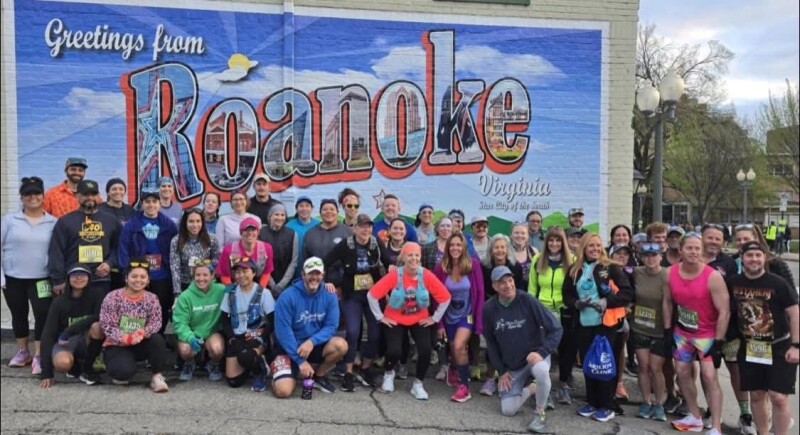
On April 12, the Carlsbad 5000, widely known as the “World’s Fastest 5K,” marked its 40th running. More than 8000 runners raced along the Pacific Coast in the Southern California town of Carlsbad.
Since its debut in 1986, the Carlsbad 5000 has grown into one of the sport’s most recognized events, attracting nearly 200,000 participants from all 50 states and 21 countries. The race has produced 16 world records and eight U.S. records.
“The Carlsbad 5000 has always been one of the most special races in the country because it brings together every level of runner,” says American running legend Deena Kastor, who joined Meb Keflezighi as one of the 2026 race’s official ambassadors. “You have Olympians, professional athletes, longtime participants and first-time runners sharing the same streets and celebrating the sport together.”
ASICS Gel #40
When ASICS released the GT II in 1986, it introduced a new shock absorption ingredient that would become a staple of its performance running footwear for decades: gel. With its viscous, silicone-based gel and a target on curbing Nike’s momentum, ASICS touted biomechanical tests in which the GT II “dispels up to 28 percent more impact than the Nike Air Epic.”
“In a 10K run, that could spare your body 1.2 million pounds of punishing force,” ASICS marketing materials beamed of the gel-infused GT II.
In the decades that followed, ASICS and gel became synonymous partners, as the Japanese brand packed various generations of gel into some of its signature running shoe models, including the Kayano and Nimbus.
Bryn Mawr Running Co #35
Bob Schwelm admits he never got into the running retail game to make money. Rather, Schwelm confesses, opening a run specialty shop outside of Philadelphia in 1991 was a necessary move to support his running habit.
“I ran competitively and this is the road a lot of us took back in the day,” Schwelm says.
Initially called Fleet Feet, though not associated with the California-based brand of the same name, Schwelm changed his Bryn Mawr, PA-based store’s name to Bryn Mawr Running Company in 1993 after threat of legal action spurred a name-the-store-contest.
“Little did I know that hundreds of other stores would start using ‘running company’ in their names,” Schwelm says.
Bryn Mawr Running Company, of course, did more than feed Schwelm’s recreational obsession. It became his life’s work. Schwelm now oversees five retail locations spread across metro Philly – three carrying the Bryn Mawr Running Company name as well as Emmaus Run Inn and Delaware Running Co.
“I’ve learned quite a few lessons over the years, but number one is to have fun and to not worry or stress over the day-to-day sales figures, or even week to week,” he says. “If you and your staff are overly concerned about making a sale, customers will pick up on it. Whether they buy anything isn’t the most important thing. Their experience is what matters most.”
Running Wild #35
After the Athlete’s Foot shuttered its location in the Quad Cities (a collection of four mid-sized cities on the Iowa-Illinois border), former store manager Steve Kilburg spearheaded the creation of Running Wild in Davenport, IA, to continue serving the area’s runners. Kilburg and Running Wild became a force on the Quad Cities’ running scene, sponsoring the renowned Bix7 road race, steering the Quad City Marathon and championing the sport with local youth.
Now owned by Devin Allbaugh and Ryan Van Buer, Running Wild continues to thrive while honoring Kilburg’s legacy. The store is a vibrant gathering spot featuring empowered staff, a high-performing racing team (Running Wild Elite) and a collaborative spirit, which includes gifting shoes to nurses at a local hospital as well as the entire graduating class of a nearby elementary school. The shop also isn’t afraid to show its personality, from social media posts in which running shoes are served on dinner plates to its quirky logo – the comical caricature of an ear of corn sporting a headband and running shoes.
“We have survived because we are not generic,” Allbaugh says. “We’ve stayed current with the times when appropriate and stuck to what we know and believe when we felt wary of trends that might not be productive long-term.”
Pacers Running #35
Ask Pacers Running owner Chris Farley what’s propelled the Washington, DC-based running store into its 35th year and Farley delivers a quick, earnest reply.
“A relentless commitment to doing the hard things that add real value to runners, our brand partners and our community – things that are difficult to do, things that others can’t do and things that create genuine impact,” Farley says.
After an unsuccessful attempt at becoming a Fleet Feet franchisee, Steve Fryxell opened Pacers in 1991 in Alexandria, VA. Over the next dozen years, Fryxell built Pacers into a beloved community institution before selling his shop to the Farley family in 2003.
Alongside his business partner, Kathy Dalby, and a dedicated team, Farley has quarterbacked Pacers’ growth into a five-store operation and multi-faceted community hub – a race partner, a run club host, a youth program supporter, the official merchandise partner of the Marine Corps Marathon and a vigorous community ally donating shoes to Title I schools and promoting fitness-promoting organizations like Let Me Run.
“The soul of what Steve built – deep community roots, expert staff and a genuine belief in running – has never changed,” Farley assures.
Daring and entrepreneurial, Pacers has not shied from dreaming up and executing bold plans. In 2006, for instance, Pacers started a race management company and grew it to serve as many as 18 events and 30,000 runners in a calendar year. Pacers also founded the DC Half Marathon, one of the continent’s fastest-growing 13.1-mile races.
An established industry leader, Pacers co-founded Relays Goods to help the industry manage returns and recommerce and launched an Amazon agency to help specialty running vendors navigate that channel.
“The through line across 35 years is this: We look at what the hard, meaningful value-add could be for our stakeholders and partners and no matter how difficult, we do it,” Farley says.
Teva Runner #35
In 1991, Teva debuted its first road running sandal – the Teva Runner, which served as inspiration for other running sandals like the Nike Air Rift. According to company literature at the time, the Teva Runner combined the elements of “a very comfortable, high-tech running shoe” with “the best designed sandal strapping system available.”
“Whether you want to walk in the morning for fitness, run a marathon or hike in one of our National Parks, the Teva Runner is the perfect replacement for your running shoes,” Teva touted. “You’ll avoid the heat and cramped feeling of a running shoe and enjoy the freedom, comfort and fit of this lightweight sandal.”
While the Teva Runner didn’t last long, Teva has maintained a steadfast belief in the potential of a running sandal. Next spring, in fact, the Deckers-owned brand will unveil its first true road running sandal, the Avenroad, since the Teva Runner’s introduction 35 years ago.
“People often ask, ‘Why would you run in a sandal?’ – and once they try it, the answer is clear,” says Teva director of global product Jess Bensley. “The construction places your foot directly on responsive foam, allows for natural toe splay to enhance balance and comfort and delivers built-in temperature regulation through its open-air design. Running sandals unlock a space where we can be both innovative and authentic to our brand heritage.”
Mizuno Wave Rider #30
In late 1997, Mizuno released the first Wave Rider, a paradigm-shifting running shoe balancing support and cushioning. The original Wave Rider featured a corrugated plate – Mizuno Wave – designed to blend softness and structure. The innovation sparked an exciting array of other performance running shoe models from Mizuno utilizing wave plates, from the stability-oriented Wave Inspire to the boundary-pushing Wave Prophecy.
The Wave Rider immediately became a staple of the Mizuno performance running lineup and a favorite of scores of runners throughout the late ‘90s and early 2000s who prized a lightweight, responsive ride. From one updated version to the next, the Wave Rider remained one of the most trusted and reliable daily trainers on the market, often finding a spot among the best-selling models in the run specialty channel.
This summer, Mizuno dropped the 30th installment of the Wave Rider, including a limited edition black-and-white colorway honoring the Wave Rider’s inaugural edition.
Under Armour #30
As an alternative to the typical sweat-soaked cotton tees that grew weighty and uncomfortable during activity, former University of Maryland football player Kevin Plank developed a compressive, moisture-wicking tee. Plank’s modest creation became the foundation of a now-global sports enterprise: Under Armour.
The Baltimore-based company initially gained traction in performance apparel before expanding into footwear in the mid-2000s, eventually entering the run category in 2008.
Over recent years, in particular, Under Armour has gained valuable momentum in the running marketplace. Its elite athletes have captured major honors on the international stage, most notably Sharon Lokedi’s triumphs at the New York City Marathon (2022) and the Boston Marathon (2025, 2026), while the brand has captured attention on the footwear side with racing models like the Velociti Elite. Under Armour has also leveraged its roots in apparel to create a compelling assortment of gear for training and racing as well as some of the running industry’s most experimental footwear uppers.
“One of the biggest things we’ve learned is that you have to stay relentlessly focused on the athlete,” Under Armour senior director of run footwear and apparel Doug Smiley says. “It might sound simple, but that focus has been a real differentiator for us, especially as we’ve worked to earn credibility in run.”
Notably, Smiley adds, Under Armour went from having a single athlete at the Tokyo Olympics in 2021 to seeing a dozen of its sponsored athletes compete in Paris two years ago.
“That kind of progress speaks directly to our commitment to showing up for athletes at every level and building credibility in run over time,” he says.
In addition, Under Armour’s partnerships with groups like CITIUS Mag and Off the Rails have enabled the brand to celebrate and honor running beyond race day.
“We’ve got a strong team and a clear roadmap and we’re thinking about how to bring our best innovations to athletes around the world in new ways – both through product and storytelling,” Under Armour senior lead in run marketing Samia Akbar says. “That includes expanding the voices we collaborate with, not just elite athletes but also unexpected partners who are shaping run culture more broadly.”
Fleet Feet Chicago #30
Eager to escape corporate life in the mid-1990s, Dave Zimmer learned about Fleet Feet after reading a book by company co-founder Sally Edwards. Zimmer and his wife, Lisa, signed on to be Fleet Feet franchisees and opened a tiny outpost in Chicago’s Old Town neighborhood in 1996.
From those modest roots, the Zimmers have grown Fleet Feet Chicago into a massive force on the Chicago area running scene as well as the highest grossing franchise in Fleet Feet’s national portfolio. Fleet Feet Chicago features 10 retail stores and a community-centric ethos characterized by weekly fun runs, training programs, a racing team and spirited philanthropic partnerships.
How have the Zimmers done it? By empowering staff to lead and by embracing change and opportunity rather than deferring to the status quo.
“We’ve never been risk-averse – perhaps even to a fault – and that mindset has helped us redefine our local fulfillment and distribution model,” Lisa Zimmer says. “In doing so, we’ve turned lost revenue opportunities into meaningful income streams that continue to fuel our growth. Most importantly, we remain open to conversations about what comes next and how we continue to evolve.”
Runner’s Edge #25
Combining the local populace’s love for the outdoors with his own entrepreneurial energy, Anders Brooker founded Runner’s Edge in Missoula, MT, in 2001 alongside his parents, Tim and Carol Brooker.
The last 25 years have delivered quite a ride for the family-owned business. The shop has moved three times, graduating each time to a larger location, and grown from two to 12 staff members. At the same time, Runner’s Edge has become a mainstay on the annual Best Running Stores in America list, including capturing Store of the Year honors in 2019.
Runner’s Edge marked its 25th year by recently expanding its footprint – adding 800-square feet to the sales floor and another 1400-square feet to the back office – while also unveiling a new logo.
“It’s hard to name all of the things that have changed since 2001, but all of them have been for the best,” says Meg Brooker, the shop’s owner and footwear buyer.
Boa Technology #25
Boa Technology’s journey began in 2001 with founder Gary Hammerslag rethinking how snowboard boots should operate, fit and perform. A quarter-century later, the Boa Fit System has been integrated into more than 10,000 products across sport and workwear, from helmets and performance braces to trail running footwear.
The Denver-based company entered the run space more than a decade ago offering an improved alternative to traditional shoelaces, but has since moved to delivering a high-quality performance fit system scientifically validated by more than 5000 biomechanical performance tests executed in its Human Performance Fit Lab. Boa is now present on trail running models from various brands, including Altra, Speedland, Merrell and La Sportiva, and has tripled its number of patents over the past decade to further propel partnerships.
“Our position in run is still emerging, and we are confident in the future due to the proven performance advantage we deliver in power transfer, stability and energy efficiency,” BoaTechnology CEO and president R. Shawn Neville says.
Running Industry Association #20
Back in 2006, a collection of running retailers teamed with Formula4 Media – the founders of The Running Event and Running Insight – to launch the Independent Running Retailer Association (IRRA). The IRRA’s mission was simple and direct: to support brick-and-mortar running retail.
While the IRRA rebranded to the Running Industry Association (RIA) in 2017 – a move thoughtfully made to foster a more inclusive culture with membership expanding to include brands and affiliate members like tech providers – the organization’s mission remains unchanged. From an early listserv providing members a communications platform to discuss ideas and challenges to today’s core programs, such as the annual RIA Summit, a freight discount program and peer-sharing Mastermind groups, the RIA promotes the vitality and sustainability of running retail.
“Everything at the RIA is focused on ensuring the success of run specialty,” says Terry Schalow, the RIA’s executive director since 2016. “Whether it’s collaboration or connection, insights or information, we’re here to support in any number of ways.”
Salomon Speedcross #20
As trail racing blossomed in the early 2000s, Salomon set out to answer intensifying calls for faster, lighter and more nimble footwear. To be certain, it was a significant task to create a shoe delivering comfort while capably excelling on challenging terrain. Salomon, however, tackled the test and developed a sleek, accessible trail running shoe called the Speedcross.
Pairing a low-profile silhouette with a tread pattern reminiscent of motocross tires, the Speedcross was an immediate hit and sold more than 10 million pairs in less than a decade. Still today, the Speedcross remains a fixture in Salomon’s footwear lineup, particularly versions 3 and 6, which have found a following in the streetwear scene.
Brooks Cascadia #20
As Brooks was regaining its foothold in the running world in the early 2000s with footwear models like the Adrenaline, visionary company CEO Jim Weber plotted a more aggressive move into the trail category. Though trail running was a niche activity at the time, Weber believed in the category’s potential. If Brooks could craft compelling footwear options for the trail, Weber reasoned, it could emerge an early leader in the growing activity.
To execute his plan, Weber solicited the help of ultrarunning star – and Seattle Running Company employee – Scott Jurek, then squarely in the midst of a seven-year run of victories (1999-2005) at the Western States 100 Mile Endurance Run.
Weber told Jurek about his desire to build the best trail shoe and asked Jurek for insights. Jurek obliged, specifically advising Weber to ditch the dual-density midsole support system common in many trail shoes of the era. The Brooks-Jurek collaboration spurred the creation of the Cascadia.
Released in 2004, the Cascadia featured Brooks’ Pivot Post system for stability and the brand’s HydroFlow cushioning system as well as a grippy outsole and sleeker upper. The Cascadia ushered in a new wave of trail running footwear – lighter and nimbler while still providing protection and durability. Gear Patrol, in fact, once called the Cascadia “the Godfather of modern trail shoes.”
From version 1 to the soon-to-drop version 20, the Cascadia has earned a legion of fans. It remains a staple of Brooks footwear lineup, evolving with modern materials and technologies while still delivering its trusted ride.
Sayville RC #20
When Michael Nolan asked his University of Notre Dame-attending neighbor Brendan Barrett about his post-collegiate career plans, Barrett shared his desire to open a running store. As luck would have it, Nolan had just visited Bryn Mawr Running Company in suburban Philly and thought his Long Island community could use something similar.
Nolan and Barrett’s spontaneous talk sparked the founding of Sayville Running Company in Sayville, NY.
As a retail newbie, Barrett had a lot to learn. Experienced vendor reps like Saucony’s Eddie Joyce taught Barrett the intricacies of the run specialty marketplace, sharing key lessons about inventory management and communications with a brand. At the same time, Barrett discovered the value of cultivating relationships with community stakeholders, including coaches and local healthcare professionals, and hiring individuals filled with purpose, a genuine desire to help others and a willingness to learn.
“We’re really lucky to work in an industry where the vast majority of people involved in it are there for more than just money,” Barrett says. “That makes for such a quality work environment.”
The early lessons spurred growth and a resilient mindset that has carried the business into its 20th year. Sayville Running Company opened a sister store, Smithtown Running Company, in 2011 and purchased a timing company in 2019 to diversify its operations. This month, meanwhile, Sayville Running Company will return to its Main Street home nearly two years after a fire forced it into a temporary location.
“Rebounding from this fire, and putting it behind us, will be such a huge boost for us, both emotionally and financially,” Barrett says.
Dash Sports #20
Dash Sports opened in 2006 as a 500-square-foot swim and run shop inside the National Training Center in Clermont, FL. While owner Kimberly Grogan built the business around expert shoe fitting, genuine customer care and a passion for helping people lead active lives, she says Dash Sports has grown into something much bigger and grander.
Over the last two decades, Dash Sports has ushered countless runners to their first race starting line, fit multiple generations of families, blossomed from a traditional triathlon and run specialty store into an active lifestyle destination, opened a second store in nearby Winter Garden, FL, and become an ever-present local force by organizing run groups, hosting races and partnering with community organizations.
And Grogan plans to maintain, if not accelerate, that pace, committed to learning and evolving Dash Sports to help people “live actively.”
“There’s a lot of energy around what’s next,” she says. “We’re continuing to grow our community impact, elevate the in-store experience and expand products and services that support active lifestyles.”
Fleet Feet Winston Salem #20
Emily and Keith Davis spent two years saving and chasing loans to open their Fleet Feet outpost in Winston-Salem, NC. Once they opened their running store in 2006, the couple then balanced those business expenses with a mortgage, student loans and car payments.
“Our families thought we were crazy, but we were going for it,” Emily Davis recalls.
Davis remembers attending Fleet Feet’s national conference before she and her husband opened their doors. There, a more experienced owner warned them they would encounter uneven sales and challenging times. While the admonition proved true, the Davises only pressed harder on the gas.
“That’s the only way small businesses make it,” Emily Davis says. “You have to have an uncommon consistency and focus.”
Driven by four core values – Passion for Running, Energetic, Curious and All In – the Davises have strengthened operations at their Winston-Salem flagship, opened a second store in Clemmons, NC, and developed internal growth opportunities for staff. The Davises also founded a nonprofit called Good Works Engine that provides shoe fittings to about 2000 homeless and low-income youth each year, organizes a 5K training program at a local prison and sends gently used footwear to Transcend Running Academy in Kenya.
“Over the past 20 years, I am most proud of how our business has become more than a business,” Emily Davis says. “It’s a ministry.”
Fleet Feet Raleigh #20
Fleet Feet Raleigh’s ascent over the last 20 years hasn’t been an accident. Growing from one retail location in Raleigh opened by Bob and Kathy Morris in October 2006 into a four-store operation is the result of calculated steps, thoughtful evolution and splashes of creativity.
From the very beginning, Fleet Feet Raleigh focused on earning the trust and satisfaction of each customer by treating them as individuals. A carefully designed fit process and expert knowledge about apparel, socks, nutrition and other goods elevated confidence in the business and captured goodwill, says Fleet Feet Raleigh operations and inventory control leader Kerry Seal.
At the same time, store leadership has secured innovative new products to ensure relevancy, invested in technology to streamline operations and developed original events like February’s annual Fleet Feet Loves You weekend to create an enthusiastic atmosphere fostering deeper connections with customers.
North Wales Running Co #20
After working for Bob Schwelm at Bryn Mawr Running Company in suburban Philadelphia, Scott Tantino returned to his hometown of North Wales, PA, to open a running shop of his own. With support from his parents, Tantino sold nearly all of his possessions, bought a local hardware store at an estate sale and began the painstaking process of converting the commercial storefront into a running shop. In 2006, the North Wales Running Company was born.
The run specialty shop has actively tried to find and meet customers where they are. The store has significantly expanded the availability of wides and colors in its inventory, added pickleball products, formed partnerships with school sports programs and invested in medical outreach. A sister store in Phoenixville, PA, called All Kinds of Fast, embraces the same mission and mindset.
Tantino credits his staff for propelling his business to its 20th birthday. In hiring, he asks himself: “Is this the type of person I would want to fit one of my own family members?” That simple litmus test has helped Tantino construct a vibrant, inspired team bringing joy, kindness and patience to his stores.
“Our staff are people I admire, people I respect and people that ultimately make us all better, and me especially,” he says.
City Park Runners #20
In the Canadian city of Winnipeg, City Park Runners has tapped into the area’s passionate running culture and become a shop “in the community, for the community and a part of the community” through group runs, races, partnerships, charity initiatives and everyday interactions inside the shop.
“We’ve never viewed ourselves as simply a place that sells shoes. We’ve always tried to create experiences and genuine human connection,” City Park Runners owner Jonathan Torchia says.
Over the years, Torchia has evolved City Park Runners from the “traditional retail mindset” of selling footwear and gear into a “true community-centered model” offering events, charity fundraising, education and social connection. For instance, City Park Runners has supported important causes while bringing people together through movement with its support of initiatives like WFPS Run and Run Your Lungs Out. Over the last 13 years, WFPS Run has helped raise over $700,000 for the Heart & Stroke Foundation while Run Your Lungs Out has delivered more than $500,000 to the CancerCare Manitoba Foundation in just four years.
“The goal has always been to keep evolving while staying true to the heart of what made the shop special in the first place: people and connection,” Torchia says.
Performance Running Outfitters #20
On July 10, hundreds gathered at Milwaukee’s Third Space Brewing to celebrate the 20th anniversary of Performance Running Outfitters (PRO), the Milwaukee area running store chain helmed by Trae and Jessica Hoepner. Before current and former employees, vendor partners, customers, family and friends, the couple shared earnest gratitude for a journey defined by entrepreneurial vision, hustle and – to borrow Trae Hoepner’s words – love and appreciation.
The couple founded PRO in 2006, 11 years after they first met and two years after they married. Jessica Hoepner credits honesty for transforming PRO from an audacious idea into a collection of four retail locations across metro Milwaukee.
“We aren’t afraid to speak our true thoughts with each other,” Jessica Hoepner assures, which enables the business to act quickly, thoughtfully and confidently.
A relentless openness with each other, meanwhile, has empowered both husband and wife to lead in different areas. While Trae Hoepner is stronger with financials, implementing efficiencies and figuring out solutions to daily issues, Jessica Hoepner excels at curating PRO’s product selection and ensuring the company’s relevance amid changing times.
“Things that we would never do on our own are implemented, which challenges our comfort levels,” Trae Hoepner says.
Altra #15
Altra has come a long way from the sleepy little running shoe brand defined by its zero-drop midsoles and wide toe boxes. In fact, Altra, now owned by VF Corp and featuring a diverse lineup of footwear for road and trail, has annual revenues pushing toward $300 million.
“We’ve kept the challenger thinking the brand was born with and pushed it to new heights through disruptive marketing campaigns, product launches, collaborations and partnerships,” Altra global brand president Jen McLaren says.
To be certain, Altra has stayed scrappy, prized innovation and doubled down on its signature fit to solidify its standing as a top trail brand while covering serious ground on the road. The 2023 launch of the AltraFWD Experience, in particular, marked a major evolution in the brand’s history as Altra’s first-ever non-zero drop shop. The FWD Experience introduced a collection of low-drop running shoes that have broadened Altra’s profile.
Alongside its robust product engine, Altra has also elevated its investment in design and leaned harder into community, partnering with voices like Diplo’s Run Club and Cooldown Running to make Altra more approachable, more inclusive and part of a bigger cultural moment.
“We’ll always question the status quo and do things the ‘Altra way,’” says McLaren, who teases Altra’s upcoming innovations in racing as something that will rattle the market. “We’re approaching [racing] in a way only we can.”
New Balance 1080 and New Balance 860 #15
New Balance celebrates the 15th iterations of two core models in its performance run catalog this year: the 1080 and the 860.
Debuting in 2010 as New Balance’s premium neutral cushioning shoe, the 1080 has maintained its place as a top daily training workhorse even amid an increasingly competitive marketplace. The 15th version of the 1080, which debuted in January, continues the series’ inventive ways. Years back, the 1080 introduced Fresh Foam to the market; with version 15 of the 1080, New Balanced unveiled a new lightweight and bouncy midsole compound called Infinion.
Like the 1080, the New Balance 860 is a hero model in the brand’s performance run lineup. Built as a replacement to the 760, the 860 packed support and cushioning together for those seeking moderate stability. Over the years, the 860 has earned regular acclaim, including an Editor’s Choice award from Runner’s World. And while past editions of the 860 are being repackaged as popular retro goods for the lifestyle market, v15 of the 860 carries advancements befitting modern daily trainers, such as New Balance’s Stability Plane technology and two Fresh Foam X midsoles.
Asics GT-2000 #15
ASICS caused a bit of consternation back in 2012 when it dropped the 2100 series – models like the 2150, 2160 and 2170 were among the best-selling performance running shoe SKUs in U.S. running stores at the time – and reshaped it as the 2000 series.
The GT-2000 v1 replaced the GT-2170, adding larger gel units in the heel and forefoot, an added layer of Solyte foam to the midsole and swapping the familiar Duomax medial posting for “Dynamic Duomax” to more smoothly control overpronation. It was a clear sign ASICS wasn’t content with the status quo, even if the status quo supplied plenty of sales.
Over the years, the GT-2000 series has incorporated many of ASICS’s most compelling innovations to elevate stability, comfort and versatility for daily training, including the 3D Guidance System to counter overpronation, PureGEL technology for improved shock absorption and a forefoot trampoline pod. The innovative tradition carried into the recently released 15th edition when ASICS integrated FF Blash Max midsole foam into the shoe for enhanced energy return.
Oofos #15
Since its 2011 founding, Oofos has morphed from a curious novelty into a national brand with television commercials, beyond-sport recognition and a meaningful spot in run specialty stores across the country, where the product attracts athletes as well as healthcare workers, hospitality pros, travelers and anyone else spending hours on their feet.
“Run specialty retailers have been essential to Oofos’s history and growth from day one. They were the first channel to embrace the brand and played a major role in introducing both Oofos and the broader recovery footwear category to consumers,” Oofos co-founder and co-CEO Lou Panaccione says.
While sandals were, of course, nothing new to the American populace, Oofos put a different spin on the typical flip flop or slide and focused on helping the body recover after exercise. The brand’s proprietary OOfoam technology was designed to absorb impact rather than rebound and reduce stress on feet, knees and lower back. A biomechanically engineered footbed and arch support, meanwhile, elevated the comfort quotient and provided the company’s flagship product a unique value proposition.
Now, the Massachusetts-based brand’s product lineup extends far beyond sandals and slides. It touches clogs, sneakers, slippers and closed-toe footwear designed for both active recovery and all-day comfort. The recent launch of Essentials PLUS has further expanded Oofos’s product catalog, taking some of its most iconic silhouettes and enhancing them with more OOfoam, greater stability and a more refined, modern design.
“While Oofos has grown significantly since our founding, the core idea has never changed: we want to make people feel good in every sense of the phrase,” Panaccione says.
Lems #15
Andrew Rademacher built Lems on the idea that shoes should mimic the natural shape of the foot and allow for movement that feels unrestricted, free and comfortable. An accomplished decathlete at Purdue University, Rademacher dissected and inspected his own running shoes, studied the fundamentals of shoe making and conceived of an alternative to conventional footwear design.
Lems prioritized a wider forefoot for natural toe splay, flexible materials for unrestricted movement and a minimalist approach eliminating unnecessary structure. The brand released its first model, the Primal, in September 2011 and steadily gained recognition in the casual footwear space. The scrappy, Boulder, CO-based company now offers more than 30 styles while more than one million pairs of Lems have made their way onto feet around the globe.
“To this day, every shoe we design starts with the same thought in mind: Keep it simple, keep it natural and let your feet do their thing,” Lems marketing director Audrey Niebes says.
Now, Lems is looking to make headway in the running marketplace. Earlier this year, the company introduced the ZenSpeed+ and the ZenSpeed Lite, offering a back-to-basics approach with a natural fit, a wide toe box, lower-drop platforms and a design enabling the foot to move as intended.
“We’re not trying to reinvent running; we’re just focused on getting back to what actually matters,” Niebes says.
Nank #15
Founded in 2011 by passionate athlete Andrew Guo, Nank (originally Naenka) was one of China’s first audio companies to focus on bone conduction technology. In the years since, the company has established itself as an innovative powerhouse in the open-air audio space, which is now its sole focus.
Nank debuted the first swim-grade bone conduction headphone (the Runner Pro) in 2020, a groundbreaking product that doubled as the brand’s first global release. It also set a new standard for sound quality and sound leakage issues with its iterative Reso Vibe Technology.
Nank then continued refining its products — better materials, increased memory size and even a bone conduction headset optimized for phone calls (the Runner Caller). The company’s continuous push for improvement has sparked international honors, including the Red Dot Design Award, which is one of the world’s most recognized marks of design excellence.
Currently leading China’s open-ear headphone market in terms of brand presence and product satisfaction, Nank continues entering other global markets, including the U.S., while advancing its product pipeline. This summer, in fact, the brand plans to release an upgraded version of its Deep Sleep Headphones, a celebrated product in China with worldwide potential.
“Stay tuned,” Guo says.
Palmetto Running Company #15
Before it was named Store of the Year at The Running Event in 2023 – heck, before it was even a store – Palmetto Running Company was actually Palmetto Running Club. Rob Fyfe founded the club and, only later, the retail shop in February 2011.
In its early years, the family-owned running store in Bluffton, SC, focused primarily on performance running footwear and serving the local running community. It has since matured into a much broader wellness and movement-focused business with a second store in Hilton Head, SC, a large community events presence and a more diverse product assortment.
“Successful running stores must constantly evolve while staying deeply connected to their community and values,” co-owner Christian Fyfe says. “The retail landscape, customer expectations and even the running industry itself continue to change rapidly. We have worked hard to stay curious and adaptable without losing sight of who we are.”
To that end, Palmetto has intentionally curated product assortments and brand partnerships favoring sustainability, heavily invested in staff education, embraced new technologies, grown its medical and workplace fitting initiatives and developed lively opportunities for movement and connection.
“Our goal is to continue evolving Palmetto Running Company into a space that seamlessly blends performance, wellness and lifestyle in a way that feels authentic to our growing coastal community,” Fyfe says.
Reno Running Company #15
Drawing inspiration from Colorado-based run specialty shops Run Colorado and Boulder Running Company, Matt Balzer and his wife, Aimee, launched Reno Running Company in 2011.
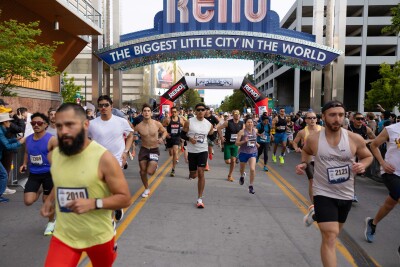
From that single retail store, Reno Running Company has sprouted into a multi-dimensional operation with an expanded retail presence (three locations in all) and a significant events business headlined by the much-beloved 178-mile Reno-Tahoe Odyssey team relay. Balzer, however, calls creating career opportunities within run specialty his biggest point of pride.
“We employ roughly 35 people with 16 full-time team members who have chosen to build their careers in this industry,” he says. “That’s something we didn’t know was possible when we started, and it’s one of the most meaningful measures of success for us.”
As for what’s spurred RRC’s longevity, Balzer says it’s delivering on customer expectations every single time, particularly on the fit stool.
“It’s engaging with genuine interest, asking questions, listening, measuring, using tools like foot scanning and gait analysis and guiding each customer to what will help them achieve their individual goals,” he says.
Early on, Balzer recalls helping a customer with foot pain. The man, who was referred to the shop by a friend, left after an hour elated, telling Balzer, “This is the best my feet have felt in years.” He then left a three-star review online, dinging the store because it didn’t offer him the gait analysis his friend told him to expect.
“That was a turning point,” Balzer says. “It reinforced that consistency is everything.”
Point 2 Running Company #15
When Andrea Lehmkuhler opened Point 2 Running Company in Newport News, VA, in 2011, she cobbled together ideas and hoped to keep things moving along. Clearly, Lehmkuhler, who shares ownership of the business with her father, Glenn Moschler, and one of his closest friends, Kevin Harrison, did that and much more. Point 2’s flagship shop expanded to a larger storefront in 2015 while a second Point 2 opened in Chesapeake, VA, in 2019.
Point 2 places a particularly hefty emphasis on community. Each year, it partners with three local nonprofits to raise awareness and funds. The company also maintains an ongoing collaboration with An Achievable Dream, providing new and gently used shoes to students from elementary through high school.
The company’s community ethos extended to its 15th anniversary celebration earlier this year. Point 2 hosted a $15 5K race and family festival with all proceeds going to H.E.R. Shelter, a local facility supporting local women impacted by domestic violence and human trafficking.
“I’m so glad that we took time to truly celebrate,” Lehmkuhler says. “So often in small business, it feels like you go from one fire to the next. At the 5K event, I was able to step back a few times and feel a real sense of community and pride in what our team has accomplished.”
Roll Recovery #15
Stuck with a basic foam roller and his own fingers to facilitate his recovery from strenuous runs, Jeremy Nelson leveraged his mechanical engineering and product design background to envision a first-of-its-kind massage tool. He grabbed old rollerblade wheels and concocted a device providing a deep, compression-like massage squeeze. That’s the ingenuity-packed birth of Roll Recovery and its flagship product, the R8.
Nelson developed multiple prototypes, collected user feedback from family and friends, including his professional marathoning wife, Adriana, and started production by selling his house and car and maxing out credit cards.
The gamble paid off. The Boulder-based company has sold more than 300,000 units of the R8 since its debut, much of that driven by word-of-mouth buzz.
“The R8 is something people try, immediately understand and then want to tell someone else about,” Nelson says.
Roll is now a multi-product recovery company with a product catalog featuring various recovery tools (a massage gun, an orthopedic foot roller and a body roller) as well as recovery footwear.
“We’ve been very careful about what we’ve chosen to focus on and develop,” says Nelson, who favors being calculated over chasing every potential opportunity.
Running Lab #15
At The Running Event last year, Running Lab earned 2025 Store of the Year honors, two years after narrowly missing out on the top prize as one of four finalists. Eight months later, the team at the Brighton, MI-based running store is still reeling from the accomplishment.
“And our team is still driving for a repeat every day,” says Ken Larscheid, who co-owns Running Lab with Toni Reese.
Running Lab’s rise is the byproduct of consistent operations and customer service carried out by a talented staff alongside a joy-promoting store culture and a fearless willingness to execute intriguing projects and events. Those ingredients have delivered 15 years of consistent growth despite a mind-bending pandemic and the seemingly unending challenges of growing a small business.
“Everything we did during the pandemic was to be accessible in the era of inaccessibility. But that hard work, grind and nimbleness gave us the opportunities to leap into Running Lab 2.0 with a relocated store double the size to help us better serve our community,” Reese says.
And Running Lab continues marching ahead. The shop recently launched a six-week running program for kids in grades one through six with games, skill development and supportive coaching designed to help youth build healthy habits, confidence and an interest in running. There’s also ongoing discussion about bringing the Running Lab brand elsewhere.
“More locations have always been discussed and if the right opportunity comes our way, we feel we are ready for that challenge,” Larscheid says.
Skechers running shoes #15
Founded in 1992, Skechers made its earliest headway in the casual footwear game, largely with accessibly priced models found at major national retailers like Kohls and Famous Footwear. In 2011, however, Skechers leadership made a bold move and entered the performance running shoe game with the unveiling of the GOrun.
Smooth and speedy, the GOrun turned some heads, including those who laughed off Skechers’ audacious effort as little more than an opportunistic stunt. Skechers, however, captured credibility in the running world throughout the 2010s, including a place on the shoe walls of U.S. running stores.
Meb Keflezighi’s 2014 Boston Marathon victory as he donned Skechers footwear ignited intrigue, while the 2018 introduction of a supercritical foam called Hyper Burst solidified the brand’s chops as an industry innovator. More recently, the debut of the Aero lineup of shoes, including the fleet-footed Aero Razor, has propelled Skechers’ positioning and earned trials.
Sky Manufacturing #10
As a junior marketing and management major at Indiana’s Taylor University, Keaton Hendricks spearheaded a project providing socks to homeless shelters. Soon after graduation, Hendricks accepted an invite to create a private label running sock for Indianapolis-based running store Athletic Annex. Through that process, Hendricks discovered an unexpected competency in manufacturing, which led him to develop socks for other running shops across the country.
These days, Hendricks’ fast-growing company, Sky Manufacturing, produces private label apparel and accessories for stores across the U.S., from Run In in South Carolina to Red Coyote in Oklahoma to Columbus Running Company in Ohio. Offering a rich catalog of products ranging from running shorts and singlets to hoodies, hats and half-tights, Hendricks says making private label manufacturing accessible, open and easy for independent retailers is his foremost priority at Sky.
“I am adamant that each season we improve from where we were,” says Hendricks, who teases a particularly exciting launch at The Running Event later this year. “I’m obsessed with the journey of improving how we serve.”
Terra Running Company #10
Population growth and a four-mile greenway convinced Brittany Katz that Cleveland, TN, would be a great place to open a running store. A decade later, those ingredients loom large in the success of Katz’s Terra Running Company, though she says the community’s earnest support of small businesses like hers cannot be overstated.
“Our customers make the extra effort to purchase from us, even if they have to wait a few days for a special order,” Katz says. “They know that each purchase makes a huge difference to a small business.”
Indeed, Terra Running has been at the center of downtown Cleveland’s resurgence. Less than a year after opening, Terra purchased a 120-year-old building on the town’s courthouse square and spent a year renovating the space, including restoring many of the building's historic aspects. Inside that historic building, Terra has added new brands, a free weekly group run, a summer youth running camp and a race timing and event business.
“Our mission will always remain the same, but the ways in which we implement it in the community are ever changing,” Katz says.
Queen City Running Company #10
From one generation to the next, the Thomsen family has been in the retail game.
In the aftermath of World War II, the Thomsens opened a general retail store in Marquette, MI. The family later transitioned that business into Johnson Sporting Goods before third-generation retailer Kevin Thomsen further sharpened the operation and opened Queen City Running Company in 2016.
Queen City Running, which has since added stores in Houghton, MI, and Iron Mountain, MI, has actively sought to strengthen its ties to the communities it serves in Michigan’s Upper Peninsula. Walls in each of the three retail stores feature photos of past and current athletes from local towns and schools. Staff regularly travel off site to support organizations and programs such as Veterans Affairs, Special Olympics and smaller regional schools by providing on-site and custom fittings. And the company recently launched its first cooperative trail series across all three locations and expanded its community-based coaching programs to support participants of all abilities.
“Operating in Michigan’s Upper Peninsula has shaped us into a resilient, community-focused business,” general manager Chad Hause says. “We focus on diversity but remain specifically true to our core value of keeping people active and engaged in the outdoors.”
rabbit #10
“Two runners. One shared frustration. Gear that didn’t fit right, didn’t move right, didn’t feel right. So, we decided to build something together.”
That’s the story of rabbit, which Monica DeVreese and Jill Deering launched in 2016 following a successful Kickstarter campaign. They sent out their first customer orders from the stockroom of Santa Barbara Running Company, the run specialty shop DeVreese co-owns with her husband, Joe.
Over the last decade, rabbit has jumped from a modest collection of performance apparel basics into a full brand ecosystem featuring technical apparel across road and trail, a footwear line and a loyal base of customers, including run specialty shops championing rabbit on their showroom floors.
“For rabbit to still be here, still growing strong and still genuinely loved by runners and the run specialty community is something we don’t take for granted for a single second,” says DeVreese, rabbit’s CEO.
And as rabbit has grown, the brand’s presence has accelerated in robust ways. Rabbit sponsors 32 trail races across the country through its Trail Tour, while its rabbit Clubhouse Series hosts runners, families and fans at boutique hotels during big race weeks in Chamonix, Chicago and New York. DeVreese, meanwhile, teases more: exciting footwear introductions, an innovation incubator and sponsorship of the Every Woman's Marathon.
Amid an uber-competitive market in both performance running apparel and footwear, DeVreese says rabbit continues to put the runner first and celebrate the sport and everyone who finds their way to it.
“What gives us an edge is that no matter how big we get, we will always listen to the runner and react,” DeVreese says. “And we aren't afraid to have fun with it. Unexpected prints, bold choices, thinking outside the box, our customers trust that whatever rabbit puts out is going to be high quality, but it might also surprise them in the best way. That combination of function and personality is something we really own.”
Näak #10
Blending a passion for athletics with an environmental ethos, accomplished triathletes Minh-Anh Pham and William Walcker created Näak to craft nutritious solutions that would both heighten performance and respect the environment.
With limited resources, Pham and Walcker began experimenting with concoctions in a home kitchen and made painstaking efforts to analyze everything from product texture to flavor profile while relying on natural products. Along the way, they sharpened core business competencies like finance and marketing and surrounded themselves with a capable team to drive the growth of Näak.
Today, the Canadian-born company boasts a growing presence in run specialty shops and outdoor stores. It’s evolving product catalog covers the ultraathlete’s entire spectrum of nutritional needs – energy, hydration and recovery – and includes bars, waffles, gels, drink mixes and more.
In addition, Näak became a sponsor of the prestigious Ultra-Trail du Mont-Blanc (UTMB) in 2023 and has since become a UTMB Premier Partner. That relationship, Walcker says, set the stage for Näak to welcome U.S.-based ultrarunning legend Courtney Dauwalter to its team earlier this year.
“[The Dauwalter] move has already amplified our brand elevation and added significant value through her collaboration on product development,” Walcker says.
Fleet Feet Davenport #10
After spending the previous decade in Iowa City, IA, “cutting his teeth” in the industry at Running Wild, Phil Young returned to his hometown of Davenport, IA, and opened a Fleet Feet shop alongside his wife, Jackie.
“We saw an opportunity to build a business together while bringing our community-first energy to an already established, strong running community,” Young says.
From a small team of six at opening, the Fleet Feet Davenport crew has grown to an organization of 40 staffers spread across two stores. With that, the Youngs have shifted their focus from covering nearly every hour of the sales floor to “people development” and being a present, accessible champion of running in the Quad Cities.
“We moved away from a heavy focus on paid training programs with target races at the end to a hybrid model where all of our run meetups, however formal or purposeful, are free and without barrier,” Young says. “It’s helping diversify our community of runners by providing easy access to any who would come.”
The Running Elements #10
The husband-and-wife team of Juan and Katrina Guevara started The Running Elements with training groups, a social run club and event support in 2015. A year later, the couple added a retail shop in Port Orange, FL. In the years since, the Guevaras have only advanced their entrepreneurial vision.
In June 2019, for instance, they moved a pinch up the Atlantic Coast to a 4500-square-foot shop in Daytona Beach. The current storefront is located across from the historic Daytona International Speedway, a location providing an accessible 5K running route from the store, ample parking and a lively environment supporting everyday traffic as well as September’s annual Run Daytona race weekend, which brings 15K, 10K and 5K foot races to the “World Center of Racing.”
More recently, The Running Elements began offering custom, made-on-site insoles with Sidas. The on-site insole station creates a unique experience for customers and delivers an additional point of differentiation for the Guevaras’ store, which has earned multiple Best Running Store in America nods.
“‘Community First’ isn’t a slogan; it’s how we operate. It’s in the way we talk to people, the way we show up and the way we keep people coming back,” Juan Guevara says. “We consistently look for ways to participate and support the community we serve.”
True Grit Running Company #10
As an environmental, health and safety (EHS) manager for a chemical company back in 2014, Melissa Vitale hit a professional crossroads. When the company added new business in the oilfield industry, they turned to Vitale to support EHS matters. Problem was, Vitale knew next to nothing about pipeline safety.
“I took that as my cue to make True Grit Running Company a reality,” says Vitale, who opened her Fort Smith, AR-based running shop in 2016 following two years of hearty planning.
After quickly outgrowing its original spot in historic downtown Fort Smith, True Grit relocated to its current location – a space 50 percent larger than its initial storefront – and has since added warehouse space to accommodate its surging business.
But True Grit has added more than square footage. It incorporated coaching and race timing while also growing its medical outreach and employer partnerships to feed the fast-churning True Grit machine. It has plans to develop a summer race series and is also considering transitioning one of its signature winter events into a race as well.
Sole Focus Running #10
While Staunton, VA, boasted a lively running scene, the closest running shop to the central Virginia city sat about 25 miles away. Sole Focus Running filled the local run specialty void with its opening in July 2016.
“The goal was to bring gear closer to home while establishing a hub for all things running,” Sole Focus Running owner Heidi Austin-Cook says.
Admittedly, it’s been far from easy. Austin-Cook largely worked the shop solo for three years before she could afford to hire staff. With relentless intent and focus, she nurtured ties to the local running community, establishing both the Slow As Sh*t Run Club and the Rock & Root Trail Club. And while initially fixated on inventory, Austin-Cook came to realize the size of the shoe wall and the brands on it mattered less than what she and her staff brought to the fit bench.
“What counts is the listening, the product knowledge and the encouragement and support you give people. This is what makes run specialty so special,” says Austin-Cook, who opened a second Sole Focus Running in nearby Harrisonburg, VA, in 2024.
Austin-Cook and her squad continue pursuing enterprising plans, too, including a walking club and resurrecting The Staunton Ten Miler, a treasured local event last held in 2009.
Blue Sky Endurance #10
On June 27, Blue Sky Endurance celebrated its 10-year anniversary in a unique way: with a 10-mile group run (or relay) from the Blue Sky shop at Carolina Park in Mount Pleasant to its sister store on Mount Pleasant’s Coleman Boulevard. Along the way, runners enjoyed a fuel and hydration stop at The Foot Store, the longstanding run specialty shop Blue Sky founder Catherine Hollister acquired earlier this year.
In addition to marking Blue Sky’s 10th birthday and the operation’s industrious evolution across the last decade, The Blue Sky to Blue Sky: 10-Year Celebration Run also signaled Blue Sky’s commitment to hosting more creative, community-driven events.
“Everything we’re working on comes back to the same goal: creating more ways for people to show up, connect and be part of something,” Hollister says.
A multisport shop serving runners, swimmers and bikers, Blue Sky has been working to build community since its 2016 founding through weekly group runs, rides and in-store events while Hollister also added races and events to her company’s portfolio. Through those gatherings, Blue Sky has raised tens of thousands of dollars for local nonprofits.
“Being able to bring people together around movement and give back at the same time is something that means a lot to us,” Hollister says.
.jpg.medium.800x800.jpg)