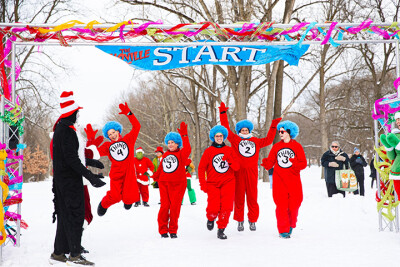
One morning each December, Grand Rapids’ Riverside Park turns into Dr. Seuss’ Whoville. It’s where runners and walkers convene for a 5K alongside beloved Whos: the Whoville Mayor, Mrs. Mayor and, of course, the Grinch. Participants run through a decoratively themed village, take photos with their favorite characters and dress up in holiday costumes of their own.
The Whoville 5K became a community tradition over the past two decades and since 2019 it has been owned and organized by local running store Gazelle Sports. Cara Cross, Gazelle’s co-owner and CMO, says the untimed event is about creating an opportunity to experience joy and nostalgia — not about performance.
Intentions are clear in the event’s tagline: “Whoville is a place, not a race.”
In a running culture that’s typically intertwined with performance, it’s a break from the mold. Yet, as more people get into running, many are placing less emphasis on pace.
According to the “Global Running Culture 2025” report by Redtorch and the Running Industry Alliance, “Runners are moving away from individual performance goals like PBs and races towards community-driven, experience-based local participation. People are actively choosing connection and enjoyment over metrics in their running behavior.”
With that in mind, running retail owners and race directors may stand to benefit from applying Gazelle Sports’ model in their own communities.
Serving as inspiration, Cross has watched the success of runDisney’s events over the years.
Taking a cue from runDisney
“It doesn’t start in the logistics or the organization or the execution of the event,” Cross explains. “It starts in Disney’s amazing ability to connect nostalgia, that childhood wonder and joy of a place.”
Runners navigate the Magic Kingdom, taking photos with Disney’s princesses and other well-known characters along the route to the finish line. The runDisney event series has grown a loyal fan base of runners and walkers who care much more about moments and memories than they do their finish times.
Last April, Cross attended the Brooks Run Specialty Summit and ran a 5K during the runDisney Springtime Surprise Weekend. Her experience reinforced her team’s approach to the Whoville 5K and provided ideas to extend and amplify their storytelling.
Leading up to this year’s event, the Gazelle Sports marketing team is working on a video series to spotlight each of the Whoville 5K’s main characters. The team plans to share the videos on Gazelle Sports’ social media channels, YouTube and in email marketing.
“We can build these stories up around these characters leading into the event, so that when we get to event weekend, there is a little bit more of that awe and wonder when you see those characters in person,” Cross shares.
This storytelling initiative adds to the Whoville 5K’s Dr. Seuss-inspired language on the event’s website and the team’s commitment to stay in character for each media interview. The magic is in the details, both leading up to and during the event.
“Our world is really heavy right now and I think the places and experiences that provide joy for joy’s sake are so important to the continued growth and relevance of the running industry and the running community,” Cross says. “That’s what’s going to sustain us through and beyond this running boom that we’re seeing.”
Retail’s prime position
This latest surge in new runners has ushered in more run clubs than ever and greater race participation. But running stores are still competing against direct-to-consumer online sellers and searching for new ways to drive more traffic into their stores.
While some retailers may put on races within their community, Cross shares, “I think what people are craving that they haven’t always had access to in running culture is a celebration of movement and community in a way that separates it from performance.”
Producing an experience-based event requires infrastructure: logistics and marketing help, community connections and partnerships, the materials and decorations to bring the event to life and the storage space to house it all. It’s not an initiative a run club could undertake as easily.
But a running retail business can make all of this happen — and may have the most to gain from the investment. While Gazelle Sports doesn’t take a profit from the Whoville 5K –all proceeds benefit the event’s charity partner, Down Syndrome Association of West Michigan – it does gain greater brand awareness, a strengthened reputation and new customers.
Packet pickup for the Whoville 5K is held inside Gazelle Sports, introducing many new runners and walkers to the store. On event day, participants’ positive experiences and memories bolster their connection to the company.
Cross says her team has noted a high rate of new event participants turning into customers. Further, participants in Gazelle Sports’ signature events, which includes the Whoville 5K, have a higher-than-average number of annual store visits compared to nonparticipants.
The benefits extend into the local community as well, igniting a love of movement and fitness.
“Our opportunity is to be a bridge from this joyful experience of movement to a continued movement journey,” Cross says. “That is one of the most critical roles that we can play as a run specialty store.”
No Grinches Here: Advice on Bringing the Joy
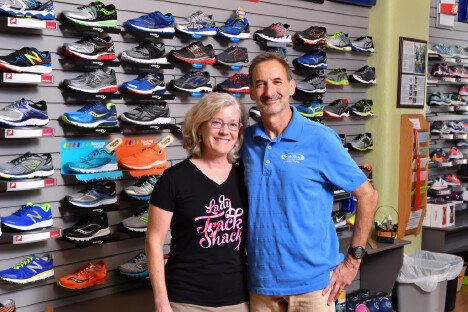
Gazelle Sports’ co-owner and CMO Cara Cross offers three tips for running retailers and race directors on creating running events rooted in joy and nostalgia:
1.
Find
a
theme
that
resonates
with
your
community. It could be character-driven or affinity-driven, based on a cultural celebration or connected to something unique in your city.
2.
Make
sustainable
decisions, such as building decorations with durable materials. This keeps costs down and connects to runners’ values.
3.
The
more
you
get
into
it,
the
more
you’ll
get
out
of
it. Lean into the details that pull together an authentic and nostalgic, joy-based event. Providing an exceptional experience for participants results in increased brand awareness and a positive reputation in your community.
.jpg.medium.800x800.jpg)