Might a biologist’s investigation into the natural characteristics of wild animals lead to improved outsoles on trail running shoes and better fitting performance apparel?
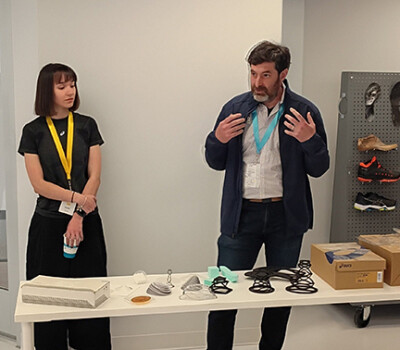
Might the traditional Japanese art of kirigami – an artistic cousin of origami that allows for folding and cutting – inspire lightweight and adaptive footwear designs?
A new interdisciplinary research center located at the University of Michigan certainly hopes so.
The ASICS-Michigan Sport Innovation Center (AMSI) combines ASICS’ global sport science and product-innovation capabilities with the Big Ten university’s multidisciplinary research strengths to fuel the creation of groundbreaking athletic products, including outsoles, midsoles and uppers for performance running footwear.
“People are looking for new innovation across the running landscape, including from ASICS, and we’re excited by what’s possible with this collaboration,” ASICS North America president and CEO Koichiro Kodama told Running Insight at the center’s grand-opening event on October 22.
Innovation from multiple angles
Backed by a $25 million commitment from ASICS, AMSI fuses art, science and engineering with the explicit goal of unlocking the future of running. The center brings together experts from areas like medicine, human performance, robotics, textiles and the social sciences to turn human-centered research into data-driven innovations fueling product development and elevating athlete performance.
AMSI is ASICS’ first U.S.-based research hub and follows a scientific tradition started by the brand’s now 41-year-old Institute of Sport Science (ISS) located in Kobe, Japan. ISS, which conducts end-to-end research in areas like exercise physiology, materials science and structural design, has helped birth some of ASICS’ most well-known running innovations, from new midsole concoctions like FLYTEFOAM to the multi-layered Impact Guidance System (IGS) created to enhance a runner’s natural gait.
ASICS leadership hopes the work being done at AMSI can generate its own collection of compelling technologies.
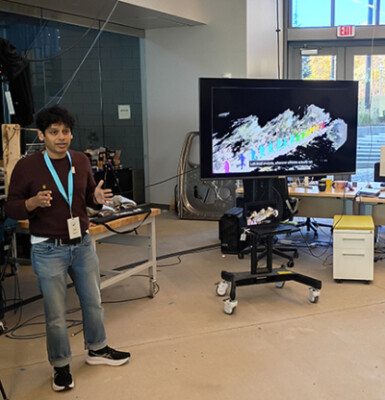
Projects currently underway at AMSI cut across multiple disciplines yet share the same goal: to better understand human performance and create new possibilities for athletes.
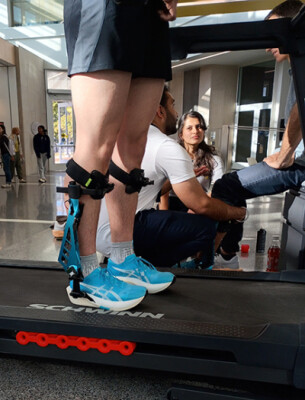
A neurobionics team led by Elliott Rouse, for instance, is exploring wearable structures that store and release energy to reduce fatigue and support forward propulsion during running. Richard Gonzalez’s BioSocial Methods Collaborative, meanwhile, is investigating new opportunities for product design by studying runners' preferences, perceptions and performance related to footwear characteristics.
In addition to its research labs, AMSI is also sponsoring a sports marketing class at the university to examine untapped markets in the running world. It will also host a visiting scholars program and a summer internship program for University of Michigan students, two efforts designed to strengthen ties between the ISS in Kobe and ASICS’ new research hub in the U.S.
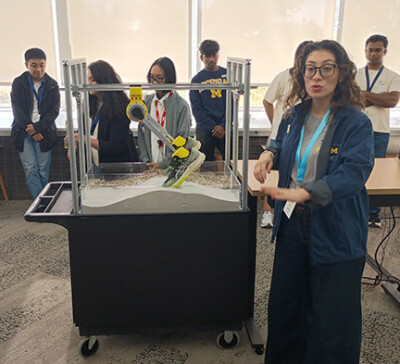
Excitement abounds
Brad Brown, who owns two Complete Runner stores within an hour of the University of Michigan’s Ann Arbor campus, called the work of AMSI researchers “fascinating” and he’s intrigued by the potential applications that could emerge from the work.
“These researchers are really thinking outside the box and it’s exciting to think of the cool products that might come from their efforts,” Brown says. “To see the investment and resources ASICS has put behind this and the collective willingness to push boundaries lets me know we’re going to see some truly innovative product in the years ahead.”
Similarly, Eric Contreras of Dayton, OH-based Runners Plus appreciated ASICS’ willingness to decentralize the R&D process and “take advantage of bright minds elsewhere” to examine distinct elements of running shoe design through diverse disciplines and perspectives.
“It signals where they want to go and the innovative energy they want to bring to performance running product,” Contreras says. “It’ll be interesting to see how they connect the dots between the different labs and come up with the next generation of running footwear and apparel.”
Innovations concocted at AMSI could weave into the marketplace as early as 2028, though Kodama recognizes product development is a long game.
“University of Michigan researchers bring a different perspective, and we’re excited to see the innovations and concepts developed through this collaboration,” Kodama tells Running Insight. “Developing and commercializing those innovations creates a different set of questions, but we’re confident this collaboration will lead to creative and unique ideas capable of driving sport performance.”