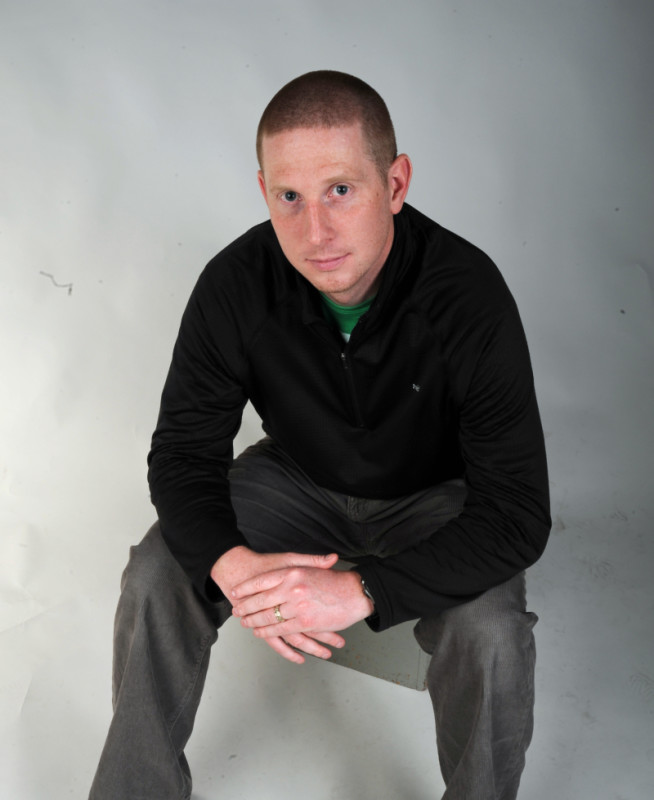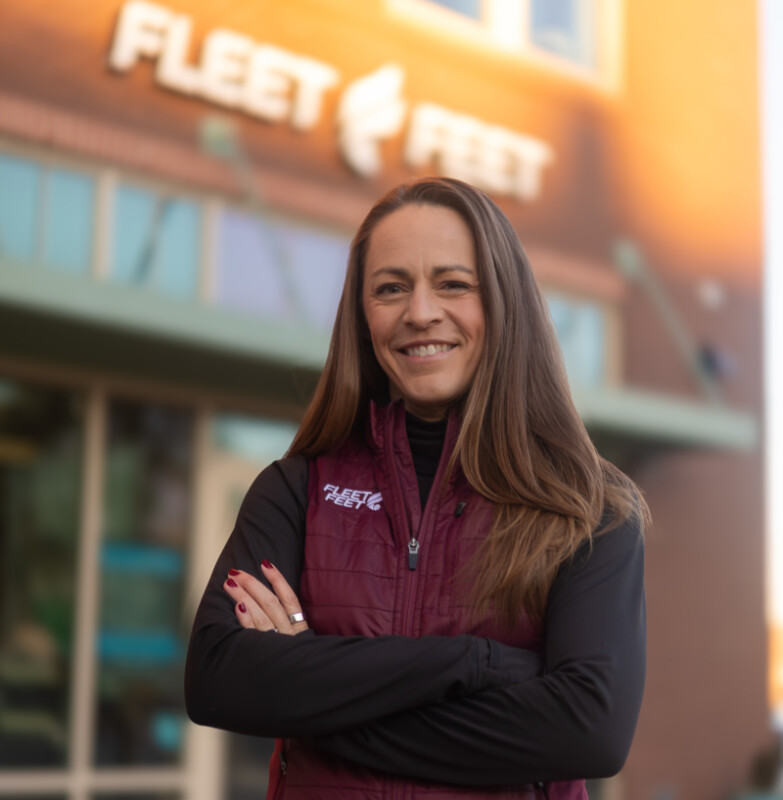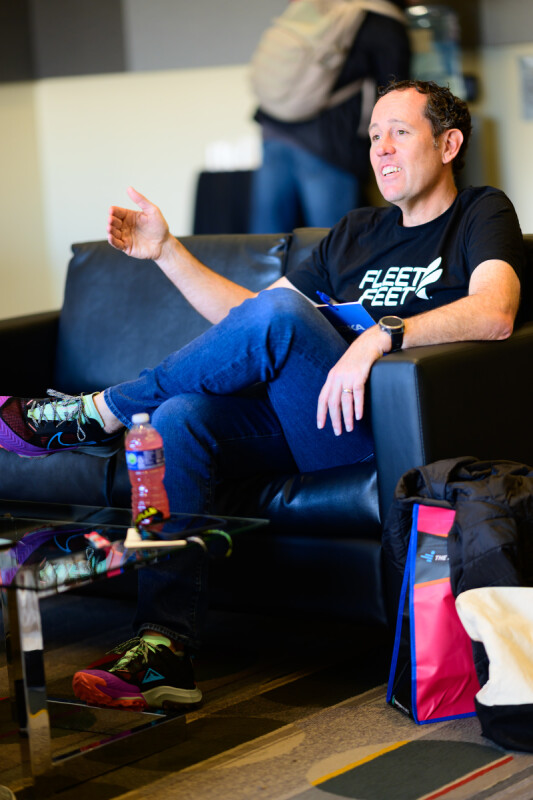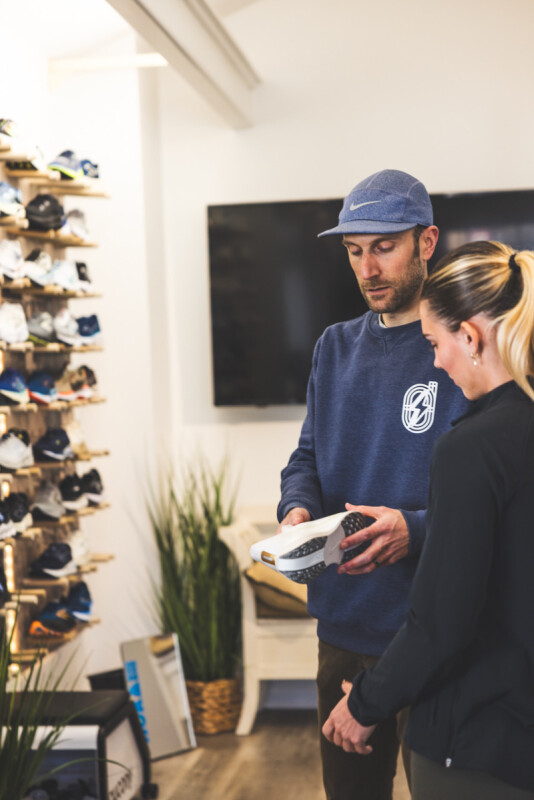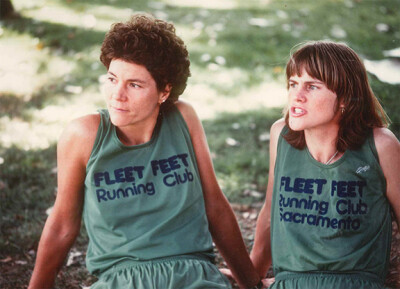
Childhood best friends Sally Edwards and Elizabeth Jansen had a clear goal when they opened the first Fleet Feet in Sacramento 50 years ago – and it wasn’t to become a national brand.
Rather, the objective was far more modest and practical: to sell five pairs of shoes each day.
“If we could sell five pairs at $20, then we’d hit our break-even point,” says Edwards, who was teaching physical education at a community college when she and Jansen, an elementary school teacher, decided to jump into the sporting goods business at age 27.
Edwards and Jansen each committed $1000 to their entrepreneurial venture, purchasing an abandoned two-story Victorian home on Sacramento’s J Street for $22,000 and going to market with a three-page business plan, a $20,000 bank loan and $20,000 in footwear from Osaga, an early player in the performance footwear game.
“[Opening an athletic shop] seemed a great way to help the community, be involved in fitness and, hopefully, create a lifestyle for ourselves,” Edwards tells Running Insight. “Personally, I’ve always been a big supporter of the beginners and getting people started on a healthy lifestyle.”
The original Fleet Feet peddled running shoes alongside baseball cleats, basketball shoes and other assorted athletic footwear. Edwards and Jansen drummed up business by purchasing a former U.S. postal truck, filling it with shoe boxes and driving it to local high schools. The business also sponsored local running events while the retail store evolved into a clubhouse of sorts for area runners.
“Sometimes, we had to kick the customers out,” Edwards jokes.
Edwards and Jansen’s entrepreneurial energy spurred both media coverage – “We became a bit of a sensation,” Edwards says – and fruitful results. With daily sales in the $200-300 range, Edwards and Jansen far surpassed their initial goal. Thinking more customers would equal more sales, they invested in a second location, opening a Fleet Feet outpost in Chico, CA, about 90 miles north of Sacramento, in 1978.
“Any kind of money we made, we poured it right back into the business,” Edwards says.
Around the same time, Edwards and Jansen received an unexpected inquiry from a stranger: Can I be a franchise? Another franchising inquiry followed. Then, another.
“Unbeknownst to us, people were watching us from the side,” Edwards says.
The partners grabbed a book on franchising, which led to the production of a one-inch thick franchise manual, two new stores (Salinas and Davis, CA), a franchise corporation and a federal trademark for the Fleet Feet name. The latter move arrived after Edwards and Jansen purchased the moniker from another Fleet Feet-named business in Colorado for $50,000 over five years.
A decade in and with Fleet Feet nearing 40 total stores, Edwards bought out Jansen. She ran the business solo until selling her stake to Tom Raynor in 1993 and turning her attention to new professional adventures, including authoring books – Edwards now has more than two dozen titles to her name – and launching Heart Zones, a health and fitness company leveraging wearable technology.
Fleet Feet, of course, has continued its ascent. Raynor amplified Fleet Feet’s annual conference, oversaw the company’s move to North Carolina and spearheaded rampant store growth as Fleet Feet locations began to pepper the U.S. map. Now under the charge of president and CEO Joey Pointer, who joined Fleet Feet in 2004 as a financial manager, Fleet Feet is the nation’s largest franchisor of running specialty stores and is approaching 300 retail locations.
Edwards, now 79 years young, is proud of Fleet Feet’s rise as well as its consistent adherence to wellness and community since its 1976 founding.
“I’m really proud of Fleet Feet and how the company has remained true to its values,” Edwards says. “The spirit, camaraderie and enthusiasm that exist in Fleet Feet stores is special and Fleet Feet has held to that across 50 years.”
________
A Fleet Feet Timeline
1976: Sally Edwards and Elizabeth Jansen launch Fleet Feet in Sacramento, CA. Edwards and Jansen will run the business together for the next decade.
1978: Fleet Feet opens store No. 2 in Chico, CA.
1984: Phil and Jan Fenty open a Fleet Feet store in Washington, D.C.’s Adams Morgan neighborhood. It is the first Fleet Feet location outside of California and will later become the first Fleet Feet store to reach $1 million in annual sales.
1992: Fleet Feet hosts its first annual conference.
1993: Tom Raynor purchases Fleet Feet from co-founder Sally Edwards.
2001: Fleet Feet moves its headquarters to Carrboro, NC.
2007: Fleet Feet launches No Boundaries, its beginner 5K and 10K training program.
2012: Fleet Feet coins the phrase, “Running Changes Everything.”
2012: Investors Management Corporation (IMC) acquires Fleet Feet from majority shareholder and CEO Tom Raynor.
2013: The 100th Fleet Feet store – a location in Mount Pleasant, SC – opens.
2017: Fleet Feet hosts its first-ever The Big Run national event on Global Running Day.
2017: Fleet Feet launches fit id, its exclusive in-store fitting experience. By the close of the following year, Fleet Feet amasses more than one million fit id scans.
2018: Fleet Feet removes “Sports” from its name and introduces a new Fleet Feet logo.
2021: Fleet Feet acquires JackRabbit, the second-largest running specialty retailer in the U.S. The deal raises Fleet Feet’s store count to 250.
2022: Fleet Feet acquires New England-based Marathon Sports and its soundRunner and Runner’s Alley brands.
2026: Fleet Feet celebrates its 50th anniversary.