For nearly a year, Extra Mile Fitness Company co-owner Heather Henderlong was on the hunt for a dynamic gait analysis system to bring into her 14-year-old running store.
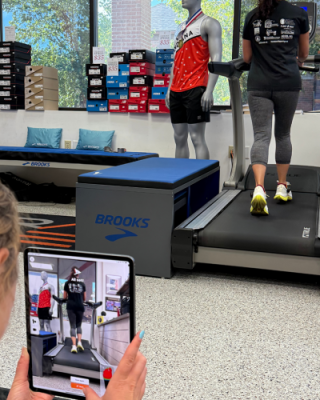
That’s because like many run specialty shops, staff at the Valparaiso, IN-based running store relied on a multi-layered fit process that included recording customers walk or run on an iPad. The process worked well, Henderlong says, but there was a lingering sense Extra Mile could do more – for the most complex cases staff see, for the shop’s most data-obsessed customers and to elevate Extra Mile’s standing in an increasingly competitive market.
Henderlong’s search for a lively solution concluded last summer when Extra Mile became the first U.S.-based running shop to utilize Arionhub, a novel system blending a smart insole with personalized biomechanical data to give clarity and confidence to consumers’ footwear selections.
Arionhub is based on more than a decade of relentless research followed by years of operation and thousands of hours of recorded movement data, according to Arion founder and CEO Andrew Statham. Built by a team of scientists, engineers and fitness enthusiasts, the AI-enhanced experience is designed to help customers find performance running shoes matching their individual biomechanical profile.
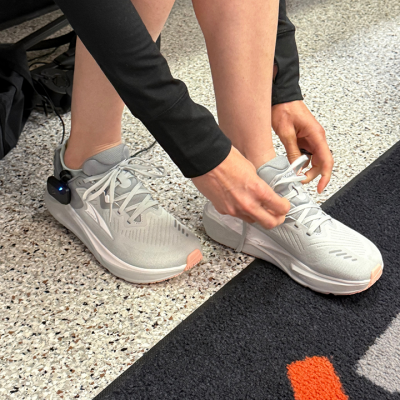
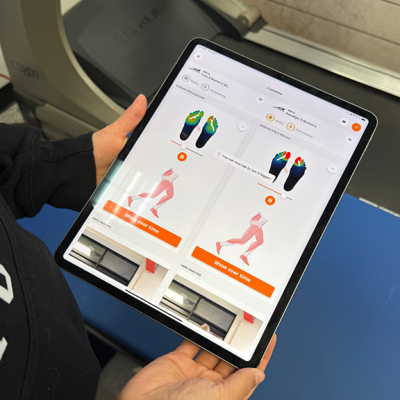
Arionhub begins with an ultra-thin, pressure-sensitive insole that slips under a running shoe’s existing sockliner. The smart insole transforms the shoe into a running lab. In just 50 steps, and with the help of a Bluetooth-enabled sensor clipped to the side of one shoe, Arionhub creates a customer’s unique running identity, firing off data like cadence, stride length and biomechanical loading figures.
The technology’s special sauce, Statham says, is its combination of direct force measurement under foot while the foot is inside the shoe with 3D foot motion monitoring.
“Whilst you may find pressure plates that measure forces under the shoe and video systems that monitor 3D motion from a distance, there are few, if any systems that can effectively monitor the forces going directly into the foot when it is inside the shoe,” says Statham, whose company is based in The Netherlands.
Notably for run shops, Arionhub can also compare specific footwear models. Retail staff can scan a shoe box to alert the system what model is on the customer’s feet. Thereafter, visualizations, such as the dynamic pressure map and estimated load distributed through joints and muscles, can help customers identify what shoe works for them and why.
Statham describes Arionhub as a “a tool to help runners find the right pair of shoes, no matter what distance or goal.”
The Experience at Extra Mile
Extra Mile customers interested in Arionhub can book an appointment for the service on the store’s website, and Henderlong estimates about one-third of the shop’s customers use the system. Many of them are struggling with injuries and eager for insights to support healthy running. Others are focused athletes hungry for hard data to optimize performance. And some are simply indecisive folks who welcome guidance to help inform their shoe purchase.
Henderlong calls Arionhub a “differentiator” for Extra Mile and a compelling addition to store operations. She says the technology helps to legitimize the store’s work and underscores its commitment to getting customers in the right footwear.
“It’s added to the conversation we can have with customers to help them find the exact footwear they need,” Henderlong says.
In particular, she appreciates the technology is independent of any footwear brand or insole company and that Arion views footwear as “an enhancement to the individual.”
“I like how the system naturally shows what the foot does in a shoe and then reports back,” Henderlong says.
A Sales Aide?
Though new to the U.S. market, Arionhub has gained a foothold in retail shops across Europe and Australia, from independent specialty shops to large players like Decathlon and INTERSPORT.
Statham says specialty retailers using Arion are seeing conversion rates up to 98 percent and selling upwards of 1.7 shoes per customer, as the system helps customers understand they may need more than one pair of shoes to meet all of their needs, from speed work to long runs to recovery days.
“We attribute this to the objective nature of performing direct measurements coupled with the powerful and intuitive visual experience that means customers feel confident in their purchases,” Statham says.
Beyond propelling revenue, Statham says ARIONHUB serves a marketing function as well. Seven in 10 consumers share their email address to receive their personalized report. It’s a value-add for the customer, Statham notes, as well as a database-building tool for running retailers looking to engage and retain customers.