This was going to be awful. Really, really bad. Unless …
I glanced up and down the street, then checked my phone before ducking back into the lobby of our AirBnB. It was nearly 5 a.m., still pitch dark and freezing outside, the kind of insanely penetrating cold that makes you wish you were in the Arctic Circle instead of downtown Manhattan. In a few minutes, I was supposed to be joining a morning run in Times Square with Back on My Feet, but I was desperately hoping they’d call it off. Hot coffee in a warm bed was the only sane way to spend a morning like that, not jogging through the dark streets of Manhattan with a bunch of strangers.
The night before, it seemed like a great offer. I’d known about Back on My Feet for years and I loved the ingenuity and incredible effectiveness of their mission. By an odd coincidence, we both entered the running world at the same time.
Back in 2007, I was hunkered in a little wooden cabin on a farm outside Philadelphia, tapping away at a keyboard as I tried to describe this bizarre adventure I’d had with a remote tribe at the bottom of a canyon in Mexico. So much of what I’d seen was almost unknown in the outside world and I had serious doubts that anyone would take me seriously. It’s strange to think of it now, but at the time, no one was eating chia seeds or wearing “barefoot” shoes except the Tarahumara Indians. Even ultramarathons were still a fringe sport; to most people, cruising 100 miles on foot seemed impossible.
Taking the gamble
While I was hammering away at a book I wasn’t sure anyone would ever read, another Philadelphian named Anne Mahlum was taking an even bigger gamble.
During her morning runs through downtown Philly, Anne used to pass a homeless shelter. One day, she did something remarkable. Instead of breezing past like everyone else, she stopped to say hi. She didn’t judge — she listened, curious to understand what had led her new friends into their situation and wondering what could lead them back out again. Some of the residents were just as curious about her and were tickled to hear that it was possible to run all the way from Philly to New Jersey and back across the Benjamin Franklin Bridge.
From those conversations came a brainstorm: Anne could never truly explain to the houseless residents how much joy and purpose she got from her runs, but what if they experienced it for themselves? What if they could share everything else she got from running: the self-esteem, the sense of accomplishment, the feeling of strength and perseverance?
No one would ever accept her offer, she figured — but she figured wrong. Once Anne began reaching out to shelters, she discovered that an astonishing number of people struggling with addiction and houselessness were interested in giving it a try. That is the genesis of Back on My Feet.
Helping thousands, one step at a time
Ever since she launched Back on My Feet (BoMF), thousands of people in recovery and on the streets have been gathering before dawn three times a week to “Circle Up” and share a morning affirmation before heading out for a run. They’re accompanied by tens of thousands of recreational runners who volunteer as guides and, more importantly, running companions.
Like many others in Philly, I’d heard about BoMF from the start and applauded its success at helping our neighbors rebuild their lives and find a path to long-term jobs and housing. Coincidentally, I was becoming known in the same place at the same time. I’d finished writing that peculiar book I’d been working on — “Born to Run” — and I’d started selling it out of the back of my car at local fun runs. Word of mouth began to spread and by the end of the year, I was being invited to events all over the country.
At one of them, I met Coach Amazing himself, the human cyclone otherwise known as Terence Gerchberg. He told me about Back on My Feet’s expansion into more than a dozen cities nationwide and I was happy to get involved. I spoke at Back on My Feet galas in Baltimore and New York and ran the Boston Marathon with a Back on My Feet bib. When my next book came out, Back on My Feet was right there as my partner, throwing an amazing launch party and securing access to an enormous theater for the unveiling.
But one experience I never had was actually running with a Back on My Feet crew. Due to odd quirks in timing, I was never in the right place at the right time to join them. That was about to change — and I was dreading it. A Back on My Feet volunteer was supposed to jog by to pick up me and my wife and the longer he failed to show, the more hopeful I got. Outside, the sidewalks were icy and a fierce wind was screeching. They had to cancel, right? No way are they getting new runners out in weather like —
BAM BAM BAM!
Time to run
My heart sank. Someone was banging on the door. We opened it to find our Back on My Feet guide with a smile on his face and frost on his eyebrows. I faked a smile in return and we were off. We jogged through the dark to Times Square, then down a silent side street until suddenly, we spotted a mini-mob of maniacs.
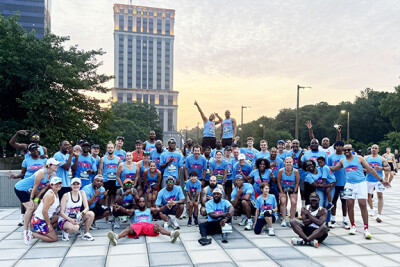
Twenty or 30 people were bouncing up and down, banging out jumping jacks while chatting away with apparently no clue that the temperature was below freezing. I spotted Terence on the far side of the circle, deep in conversation with a woman who kept cracking him up. He spotted us and yelled for everyone to quiet down so he could begin introductions. As we went around the circle, sharing names, I realized I’d never been in a more intriguingly diverse running group in my life. People of all ages, body types and backgrounds were there, uniting in a common cause.
“Yes,” I thought. “This is the real magic of Back on My Feet.”
But then we started to run — and I discovered I was wrong. We were trotting down Broadway toward Union Square Park in a pitter-pattering parade and that’s when it clicked. I saw faces staring at us out of passing taxis and the surprised expressions from a few early-morning commuters and it finally dawned on me what Back on My Feet is really all about. It was right in front of my eyes for years, but I had to experience it for myself to understand.
Back on My Feet isn’t really about running. It’s about visibility. It re-creates the same special moment that Anne Mahlum had years ago, back when she took the time to actually look into the eyes of the people she was passing on the street. That’s the true power of Back on My Feet: it gives invisible people the opportunity to be seen, to occupy the streets with pride. And right alongside them, sharing the same space and mission, is an army of volunteers who are proud to show that running has a purpose greater than themselves.
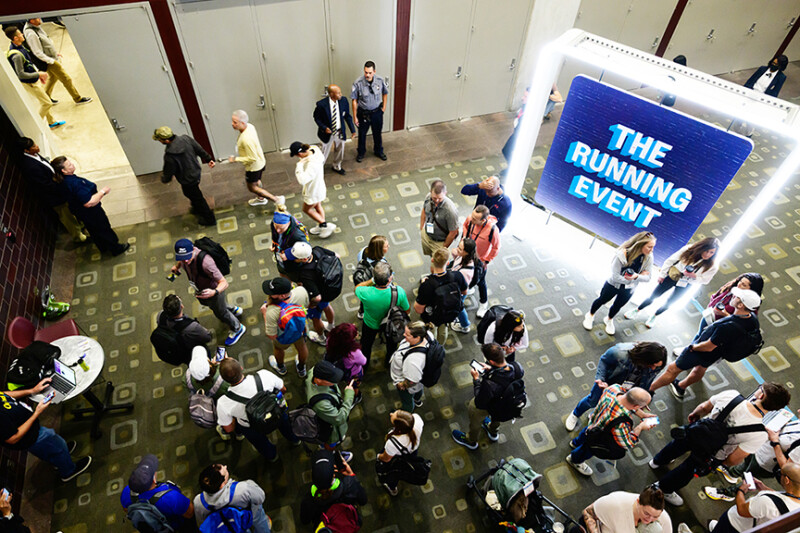
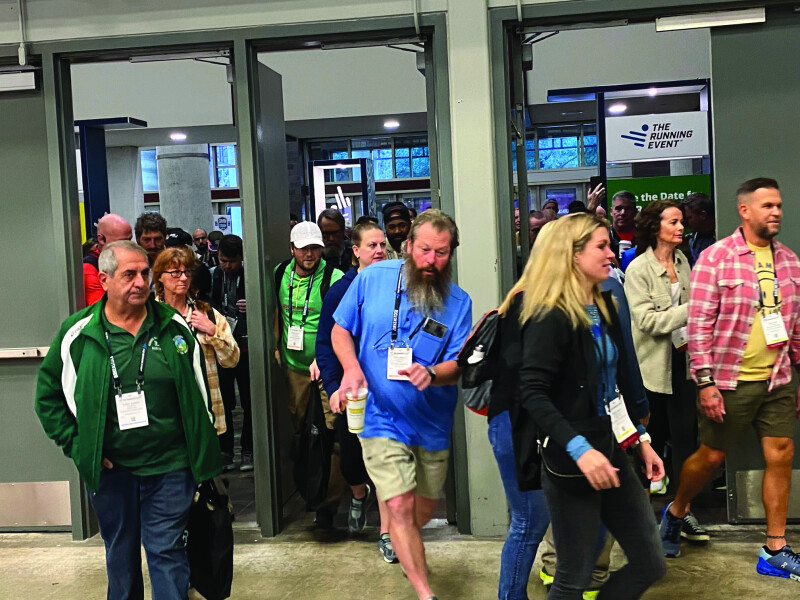
That’s why the race bibs are such a big deal. They’re more than a special prize for dedicated Back on My Feet runners — they’re an opportunity to be seen on some of the greatest stages in the sport. This fall, more than two million spectators will line the streets of New York City for the marathon.And who will they see? • Luis N., a 59-year-old who should be dead or behind bars by now, but instead outran his drug dependence and PTSD from incarceration and military duty to become a strong, sober and utterly dependable Back on My Feet alum (By the way, you can hear Luis tell his story in person at a panel at The Running Event in San Antonio, TX, in December.)
• And somewhere else in the pack will be June O. You’d never guess it from her beaming smile, but June has struggled with alcoholism and houselessness since she was a teenager. Since joining Back on My Feet, June has maintained the longest sobriety of her life and has become one of the most dependable runners in her BoMF squad. At age 31, she’s locked into a running routine at a moment that can change her future forever.
Stories behind the bibs
Most people watching the marathon will never know the stories behind those bibs. But anyone who’s ever heard of Back on My Feet will witness something special.
They’ll watch those runners stream past and feel a special thrum of joy, knowing that somewhere in that crowd, a handful of people have lifted themselves off the streets to run them with pride.
Back on My Feet operates in 14 cities nationwide, using running and community to help people experiencing homelessness and addiction build toward greater independence. Learn how to get involved at backonmyfeet.org.