Let’s start with this: What exactly is this thing called the “Reuse Economy?”
Wayne Elsey: The reuse economy is a modern model that shifts away from the unsustainable “take-make-waste” model. In the reuse economy, products are repurposed, redistributed and reused to extend their lifecycles rather than throwing them away in landfills. It means creating new value for consumers for products that already exist. It’s a hand UP, not a handout.
Can you give some examples of what this means, particularly to the running industry?
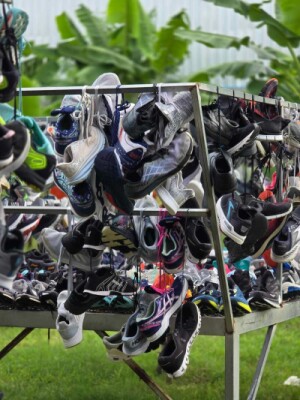
A great example of what it means for the running industry is athletic shoes. Runners rotate sneakers approximately every 300 miles. Often, those running shoes end up in the trash, but they still have value and a life in good condition. They can serve another person through ethical, proven reuse programs that deliver local community impact, payment and sustainability solutions for micro-entrepreneurs in developing nations who need an economic hand-up.
Is this a new concept or has it been around for a while?
The reuse economy has been with us for a very long time. The reality is that the majority of the global population wears second-hand sneakers and apparel.

That sounds like the vintage stores that are scattered around the country.
Yes, in a place like the U.S., we’ve had the concept of “vintage” and thrift shops for generations. What is new is that companies and the general public realize that the take-make-waste model is unsustainable, so the reuse model is now being integrated into companies, supply chains, and business strategies.
Why is this gaining traction now? Is it?
The reuse economy is absolutely gaining traction for two reasons. First, public sentiment and consumers have pushed for sustainable solutions because of the increased awareness of waste. Second, rising energy costs and inflation make manufacturing more expensive for companies.
And the footwear industry’s impact?
The footwear industry alone generates a significant carbon footprint, with hundreds of millions of shoes and sneakers sent to landfills each year. In that reality, extending the life of footwear and other products is a practical and economic solution for people and businesses.
Has the run specialty business - both retailers and brands – embraced this concept? What grade would you give each?
I’d give retailers an A+ because they move faster, since they’re closer to consumers and understand the sentiment for sustainable solutions. Our reuse program grew exponentially because of run specialty stores along with road races that understand the demands and needs of consumers. For brands, I’d give them an A-.
And the shoe brands?
Some brands are certainly moving to manufacture and create reuse programs, but large-scale design and supply chain changes take time.
How can run specialty retailers make an effort in this?
It’s easy for every run specialty retailer to become a reuse leader in the community. All they have to do is become a drop-off and collection point in their town for gently worn, used and new sneakers. When customers drop off sneakers, it’s an opportunity to engage and inform them about reuse, which builds loyalty for the retail brand and earns them even more trust in the community.
What kind of commitment is needed for an individual store to make a difference?
Candidly, all stores have to do is have the desire. Our company, for example, provides a free turnkey running shoe (sneaker) reuse solution, and they can become a certified sustainable store in their community with customer returns, gently worn sneakers, excess inventory, etc. It takes minimal staff time, and it can be as easy as creating space for a collection box and informing customers that the store supports sustainability.
So, in other words, what’s in it for them?
When retailers lead sustainability and join the reuse economy movement, they create stronger community engagement and customer loyalty. Runners want to be part of something that supports and shares their values — and runners are a very sustainability-focused group. Reuse programs bring current and new customers into stores and that creates conversations, connections, and sales.
Same question, but for the running brands: What is the benefit for them? Is there an ROI that can be placed on any effort?
For brands, tangibly, reuse efforts can reduce waste, lower costs and strengthen supply chain and sustainability goals. Intangibly, becoming part of the reuse movement builds and strengthens brand trust. Consumers and the public want to support socially responsible brands that are leaders and not followers. That makes becoming part of the reuse movement an easy win for brands that want to differentiate themselves as leaders.
What are the challenges you have come up against in moving this concept forward?
The greatest single challenge is mindset and a lack of awareness of what to do with gently worn, used and new sneakers. We have to keep doing the work of letting people know that even when running shoes are past their prime for running, they still have value.
Any other challenges?
The other challenge for a company like mine is to continue promoting and letting runners and the running industry know that we serve as a bridge between them and the reuse economy, responsibly extending the life of athletic shoes. Our communication strategy and the absolute truth is that these sneakers are “the mode of transportation” in developing nations.
Here’s a big thought question: What happens if the concept of a Reuse Economy doesn’t keep moving forward?
Candidly, I can’t see it not moving forward because the “take-make-waste” model is simply not sustainable — and the size of the reuse economy is nearly $600 billion and is only growing. However, if, for some reason, it doesn’t grow, we’re in for very difficult economic and environmental times.
How’s that?
I don’t focus on that hypothetical because my headspace is focused only on the reuse market. The largest issue in most unregulated countries is the amount of “fakes” or “dupes” of the actual brands that look close but have very little life because of quality and the poor construction, prohibiting the comfort and durability needed and present in the authentic product.
What is your goal in the “reuse economy” and what is it going to take there?
My goal is to continue to make reuse a part of how companies and consumers think about products. For our company, that means continuing to expand our market share in the running industry in North America and with our global reuse partners in about 24 countries worldwide, to build economic opportunities.
And working with retailers and brands?
We intend to continue collaborating with retailers, brands, marathons, road races and the public to keep sneakers and running shoes in circulation for as long as possible and to keep making the reuse economy something easy for people to join.
_________
The ’Reuse Economy’ Defined
“The reuse economy is an economic model that prioritizes extending the life of products and materials through repair, refurbishment, sharing and resale, rather than discarding them after one use. It moves away from the linear “take-make-dispose” system, operating instead as a component of the circular economy to reduce waste, resource depletion, and carbon emissions.
Key Aspects of the Reuse Economy:
• Fundamental Principles: Focuses on the “R” principles – specifically reuse, repair, refurbish and repurpose – to keep items in circulation.
• Infrastructure and Activity: Includes systems like returnable packaging, rental services, donation and sharing, rather than solely breaking down materials like traditional recycling.
• Sustainability Goal: Drastically decreases the demand for new production and virgin resources by maximizing the utility of existing goods.
• Economic Impact: Fosters localized, resilient economies by creating jobs focused on logistics, cleaning, and repairing items, often described as creating a “just” economy.
______________
Read All About It ….
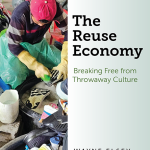
Wayne Elsey has a new book coming out about the Reuse Economy with a collection of visuals to put a bow around the concept for retailers, brands and consumers to bring awareness and attention to the need and reality.
Excerpt from the upcoming book: “The Reuse Economy: Breaking Free from Throwaway Culture”
“The insatiable appetite for cheap products resulting in overconsumption isn’t about trends, and unfortunately, most people don’t realize the systemic damage they’re causing. If they knew, many consumers would walk away from spending on the latest deal.”