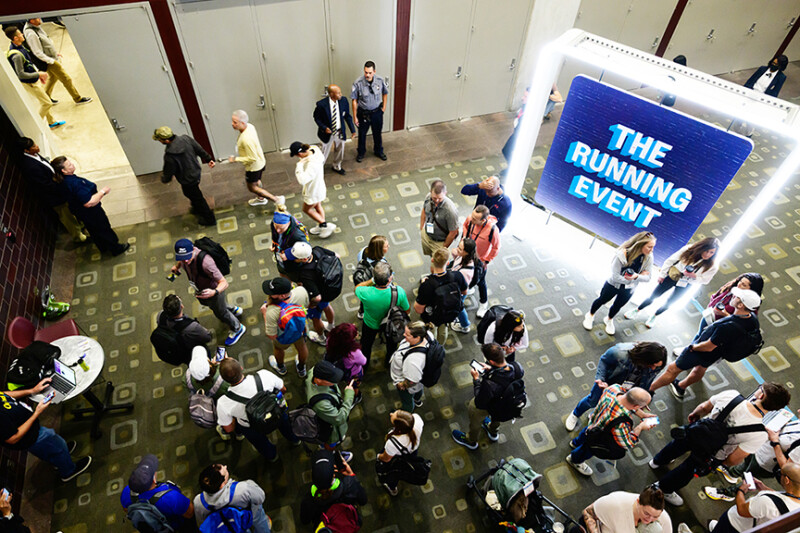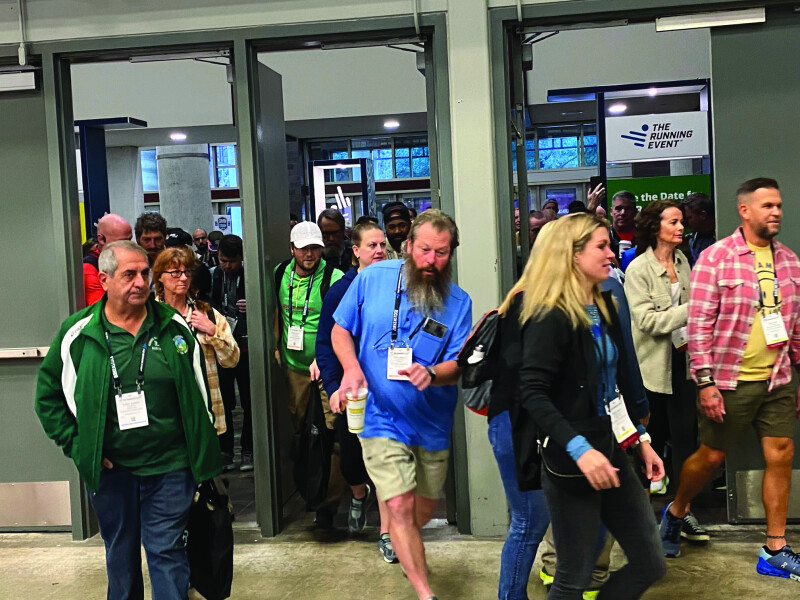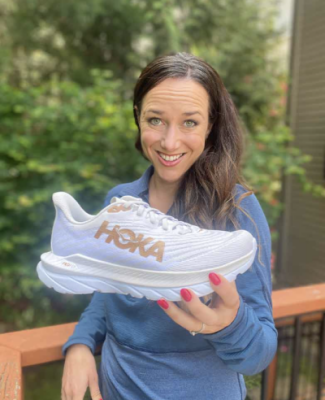
While criss-crossing a trade show back in 2013, my curiosity was piqued by a new brand that literally towered over a sea of minimalist running shoes. The innovation was a protective, tall stack shoe, which over the past decade has moved from merely imaginative to imaginatively mainstream. Shoes don’t make themselves and Hoka’s team is led Bekah Broe, a runner who is focused on producing the best footwear possible. As a leading female designer in running, Broe has some interesting insights into the business, how women are impacting shoe design in 2026 and where the industry goes from here.
What did you imagine as a career when you were growing up?
I grew up on a small farm in Illinois, so the footwear industry wasn’t even remotely on my radar. The most intriguing careers to me from childhood through high school were actress, vet, lawyer, writer (all over the map, I know). I was always drawn to occupations that felt like a challenge, but bounced back and forth between wanting that challenge to result in a more physical output (practicing law, helping animals) versus a more creative one.
How large is your footwear team now at Hoka?
We have a team of 10, including product managers across the categories of road, trail, recovery, work and fitness as well as a product coordinator.
How long have you been a runner? Do you still compete?
I started running track in middle school. I still remember the thrill of breaking six minutes for the mile for the first time in eighth grade and I was totally hooked. I ended up running for a small D1 school for two years before taking some time off for a pretty major hip surgery. Since then, I’ve enjoyed exploring different parts of the sport. I’ve done a few half Ironmans, a bunch of road races from the mile to 13.1, and over the last few years have really fallen in love with the trail running scene dabbling in some 50Ks.
How does your daily run affect your inspiration and focus on footwear?
I consider myself a runner, even when I’m not able to run regularly — that’s the phase I’m in right now. When you’re going through injuries or focused on other priorities in life, you’re still thinking about getting back to regularly enjoying this thing you love. Knowing that our teams can help runners (including ourselves) be able to consistently get out the door and move our bodies is such a tremendous pressure and privilege.
These days when I’m running, I often find my mind wandering into an amazing series of “what if” questions. What if we changed this lacing system? What if this shoe could be even lighter? Similar to our founders asking, “What if running downhill felt like flying?,” following these little questions on the run can lead your mind to some really fun places to explore.
How does your input as a female runner affect/improve your running footwear?
In an industry that still tends to over-index on male sizing, experience and engineering, I think it’s crucial to ensure Hoka can be a brand that also advocates for women’s needs through our products. It’s been incredibly rewarding to work with a strong contingent of female developers, wear testers, athletes, product managers, designers and innovators to make sure the products we’re creating are doing what we intend them to do, for the runners we’ve built them for.
The impact that the Hoka brand has had on the industry is significant. How does that impact determine future product for you?
Hoka disrupted the industry by solving a clear problem, figuring out how to scale curiosity and delivering a unique experience that was unlike anything currently on the market. The (fun) challenge now is finding new ways to answer old problems, identifying areas of white space and future disruption and simultaneously balancing the needs and wants of a consumer base that already trusts the brand.
What is the most significant change you’ve seen in running footwear during your career?
Advanced compounds or “super foams” have changed everything. Tried and true geometries, rocker profiles, stack heights, base nets and outsole designs all react incredibly differently with these new incredibly resilient, lightweight and often extremely soft compounds. Watching the industry adapt and learn and grow together has been wild and in general I think really great for runners looking for new ways to enjoy their miles.
Is there a considerable amount of travel? Has the magic of the internet made things easier?
Being able to connect with partners across the globe certainly opens the door to gathering insights faster, but it’s hard to replace real-time experience and connection. Travel is a crucial way to spend time learning from runners and truly understanding what running means for them and their community. We aren’t mind readers – truly immersing ourselves in these communities can help us create better products and fully understand how running culture is changing in real time.
How do you balance the performance product from the casual and “orthopedic” use?
We are big believers in the power of “and.” Every performance style we create should have a functional intent and a stylistic point of view, but we won’t sacrifice performance for aesthetic. Runners are embracing our sport as a holistic form of self-expression, so giving them plenty of variation in style to choose from and trusting that we’ve done the work to ensure it performs is key.
Finally, what does 2026 and beyond look like for Hoka’s product development and growth?
Most of our Performance team members are runners. We’re competitive to our core, and truly dedicated to the service of the sport we all love. Creating footwear can be a lot like training – rewarding, frustrating, repetitive, exhausting. But by staying curious about how we can improve and the needs of those around us, some magical things can happen.